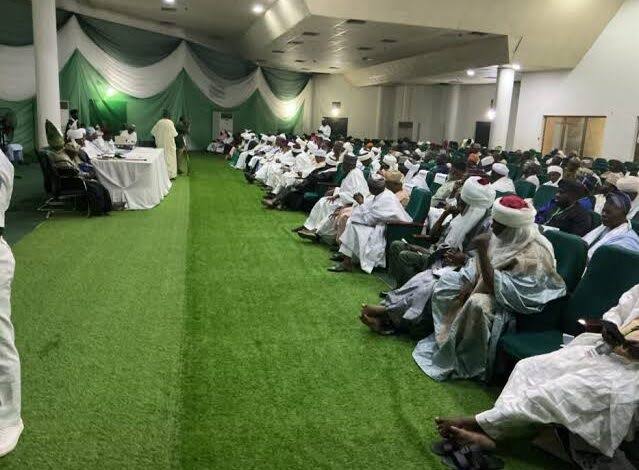
The Nigerian Supreme Council for Islamic Affairs (NSCIA) has called for an urgent and comprehensive overhaul of Nigeria’s security architecture, while supporting the establishment of state police subject to strict professional and constitutional safeguards.
The position was contained in a communique issued after the council’s General Assembly in Abuja and signed by the Sultan of Sokoto and NSCIA President-General, Alhaji Muhammad Sa’ad Abubakar, alongside the council’s Secretary-General, Professor Is-haq Oloyede.
The Islamic body said any move towards state policing must be anchored on professionalism, constitutional safeguards, impartiality, accountability and sustainable funding.
It also called for effective coordination between federal and state security institutions, alongside respect for fundamental rights.
The NSCIA’s position adds the influential Islamic council to the growing national debate over whether Nigeria’s centralised policing structure remains adequate for the country’s security challenges.
Supporters of state police have argued that a more decentralised system could improve intelligence gathering and response times by bringing security operations closer to local communities.
Critics, however, have repeatedly raised concerns over the possibility of state governments politicising local police structures or using them against political opponents.
The NSCIA sought to address such concerns by making professionalism, constitutional safeguards, accountability and impartiality central to its support for state policing.
The council also maintained that insecurity affects Nigerians regardless of religious affiliation and rejected claims of a Christian genocide in Nigeria.
The intervention comes amid persistent security challenges ranging from terrorism and banditry to kidnapping, communal violence and other criminal activities across different parts of the country.
The NSCIA argued that addressing the crisis requires more than deploying personnel, calling instead for a broader restructuring of the systems responsible for protecting citizens.
Its position could add weight to ongoing conversations around constitutional amendments and the future structure of policing in Nigeria, particularly as lawmakers and political stakeholders continue to debate decentralisation.
For state policing to command broad public confidence, the council’s conditions point to the need for clear legal boundaries, independent oversight, sustainable financing and mechanisms capable of preventing political interference.
The debate is expected to remain a major part of Nigeria’s security and constitutional reform agenda as the country searches for a more effective response to its complex and evolving security threats.