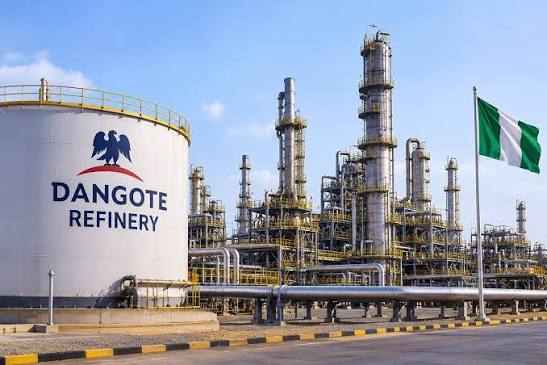
The refinery’s reported nine-month performance marks a sharp reversal from the $117.2 million loss recorded in the corresponding period of 2025.
Dangote Petroleum Refinery and Petrochemicals has reported revenue of $22.5 billion and net profit of $4.7 billion for the nine months ended September 30, 2026, marking a significant turnaround from the loss recorded during the corresponding period a year earlier.
The company’s reported performance compares with a net loss of $117.2 million for the first nine months of 2025, highlighting a substantial change in its financial position.
The figures point to the growing financial significance of the refinery, which forms part of Aliko Dangote’s wider industrial investments and has been positioned as a major source of refined petroleum products for Nigeria and international markets.
The company’s revenue reportedly increased from $9.2 billion in the corresponding period of 2025, while earnings before interest, taxes, depreciation and amortisation (EBITDA) rose to $5.5 billion.
The reported improvement was attributed to factors including higher refining throughput, improved operational reliability and stronger refining margins.
A significant shift in performance
The reported figures suggest that the refinery has moved from a loss-making position in the first nine months of 2025 to a substantial net profit in the same period of 2026.
Revenue growth measures the value of sales, while net profit reflects what remains after expenses and other applicable costs have been accounted for. The distinction is important when assessing the company’s overall performance.
The reported EBITDA figure provides an additional measure of operating performance before interest, taxes, depreciation and amortisation, although it should not be treated as equivalent to net profit or cash flow.
The scale of the reported earnings also raises the refinery’s profile in discussions about Nigeria’s domestic refining capacity, fuel supply and the country’s exposure to imported petroleum products.
Implications for Nigeria’s petroleum market
A refinery operating at scale can influence domestic fuel availability, the demand for imported refined products and the movement of petroleum products through regional markets.
However, strong company earnings do not automatically translate into lower pump prices. Retail prices also depend on crude oil costs, exchange rates, transportation, distribution expenses, taxes and prevailing market conditions.
The long-term significance of the reported results will therefore depend not only on profitability but also on sustained operational performance, supply arrangements and the refinery’s contribution to the wider petroleum market.
The figures represent the company’s reported performance for the nine-month period, rather than a full-year result. Further assessment of its financial position would require consideration of the complete financial disclosures and the factors shaping costs, sales and margins.