Senate leaders describe the inclusion of politicians from different parties in Tinubu’s campaign council as a significant political development, although the alliance’s electoral impact remains to be tested.
The Nigerian Senate has expressed support for the Rainbow Coalition, a cross-party political arrangement backing President Bola Tinubu’s re-election bid, with Senate leaders expressing confidence that it could strengthen political inclusion ahead of the 2027 general election.
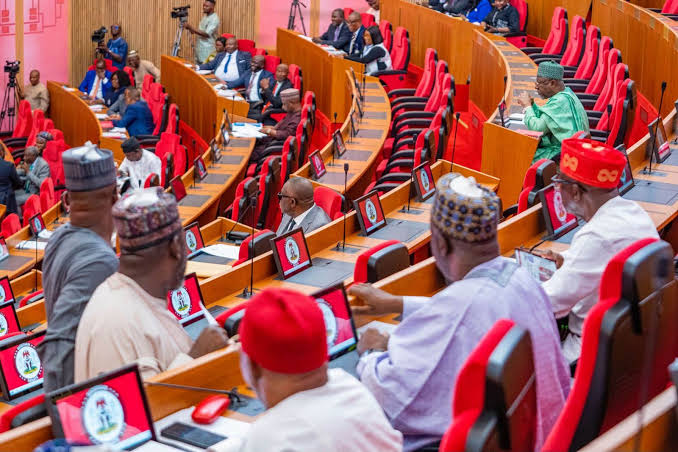
The Senate Leader, Senator Opeyemi Bamidele, and Senate President Godswill Akpabio made the remarks on Wednesday, October 14, 2026, after lawmakers adjourned plenary proceedings early to allow senators serving on the presidential campaign council to attend its inauguration at the Presidential Villa in Abuja.
Bamidele, who moved the motion for adjournment, described the development as significant and asked his colleagues to recognise the importance of the emerging political alliance.
He said the inclusion of politicians from different political backgrounds in the campaign structure represented an opportunity to promote a more inclusive approach to national leadership.
Akpabio also described the arrangement as historic, arguing that the participation of opposition figures in an incumbent president’s campaign council marked an unusual development in Nigeria’s democratic experience since 1999.
A coalition beyond party boundaries
The Rainbow Coalition brings together political figures from different parties who have expressed support for Tinubu’s second-term ambition.
Among those associated with the arrangement are FCT Minister Nyesom Wike and Osun State Governor Ademola Adeleke, who belongs to the Accord Party.
Their participation illustrates how political alliances can extend beyond formal party membership, particularly when influential politicians decide to support a presidential candidate from another party.
Supporters of the arrangement argue that such cooperation can encourage national cohesion and create a broader platform for governance.
However, cross-party endorsements do not necessarily guarantee that supporters of participating politicians will vote in the same way. The alliance’s strength will depend on the extent to which its members can mobilise voters and maintain cooperation during the campaign.
Senate leaders express confidence
Bamidele and Akpabio expressed optimism about the coalition’s prospects, linking the arrangement to their vision of a more inclusive political system.
Akpabio described Tinubu’s proposed second term as a potential “unity government,” arguing that the campaign council reflected a willingness to work with politicians across party lines.
He also acknowledged the importance of the electoral process, saying he would not formally predict the outcome of the election.
The remarks came as political parties and campaign organisations intensified preparations for the 2027 presidential contest.
Electoral test lies ahead
The coalition’s emergence could influence political negotiations, campaign coordination and the distribution of support across states.
Nevertheless, the ultimate test will be whether its members can translate public endorsements and political agreements into votes on election day.
The 2027 election will be decided by voters, and the strength of the competing campaigns will depend on their organisation, policy proposals, public credibility and ability to address national concerns.