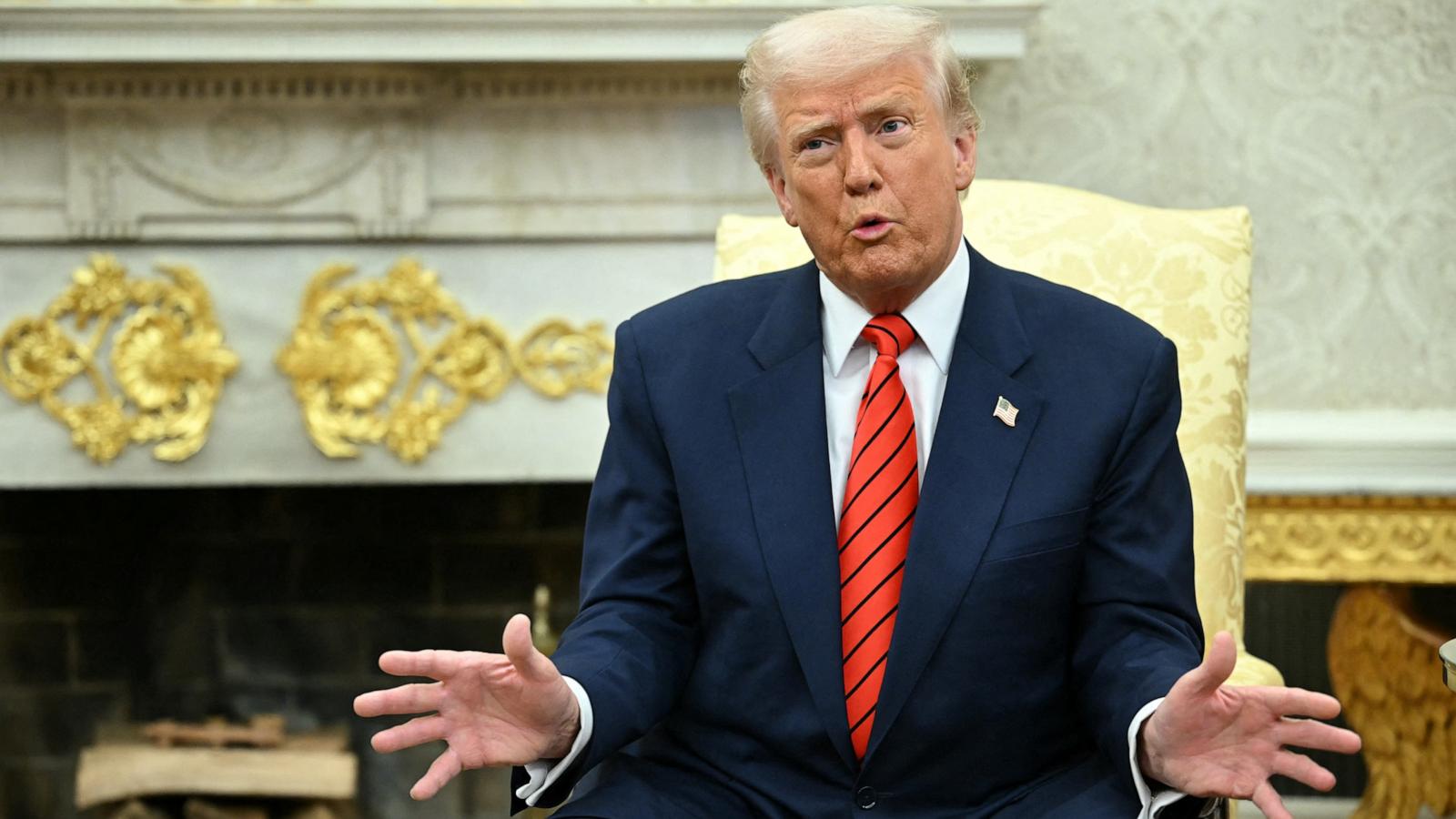
The US President links the remark to trade grievances and tariffs, while Canadian political leaders continue to reject the idea of joining the United States.
US President Donald Trump has renewed his claim that Canada could eventually become the 51st state of the United States, reviving tensions over trade, tariffs and the economic relationship between the neighbouring countries.
Trump made the remarks during a political rally in Bullhead City, Arizona, on Wednesday, October 14, 2026, where he criticised Canada’s trade policies and accused the country of treating the United States unfairly.
“Canada treats us very badly. They always have. Not anymore. It’s a whole different ball game now that Trump is in town,” he said.
The President also criticised Canadian tariffs on dairy products and other goods, arguing that American businesses and consumers faced unfair treatment under existing trade arrangements.
“They’ll end up being the 51st state, because it’s the only way it works,” Trump said. “We don’t need them, but they need us.”
Trade disputes underpin Trump’s remarks
Trump’s comments came amid continuing disagreements over tariffs, cross-border commerce and the balance of trade between the two countries.
He argued that Canada benefited from its economic relationship with the United States while imposing restrictions on certain American products.
The President also questioned why the US should continue spending money to support a neighbouring country that remains politically independent.
His remarks reflect his longstanding preference for using economic pressure to pursue what he considers more favourable trade terms.
However, the suggestion that Canada could become an American state remains a political declaration, not an agreed government policy or an established constitutional process.
Canada rejects statehood suggestion
Canadian political leaders have repeatedly rejected Trump’s proposal and defended the country’s sovereignty.
Ontario Premier Doug Ford previously insisted that Canada would not become part of the United States, while British Columbia Premier David Eby announced plans for border signs declaring that the province would never be the 51st state.
The Canadian government has continued to operate as a sovereign state with its own constitution, elected institutions and foreign policy.
Any change to Canada’s constitutional status would involve extensive legal and political obstacles and cannot be achieved through a unilateral declaration by the US President.
Implications for US-Canada relations
Trump’s renewed remarks risk adding political tension to an already complicated trade relationship between two countries whose economies are closely connected.
Businesses on both sides of the border rely on integrated supply chains, while millions of people depend on cross-border commerce and cooperation.
Although Trump’s comments have revived debate about tariffs and sovereignty, there is no indication that Canada has agreed to become part of the United States.
The immediate question is whether the rhetoric will translate into further trade measures or remain part of the President’s broader political messaging.