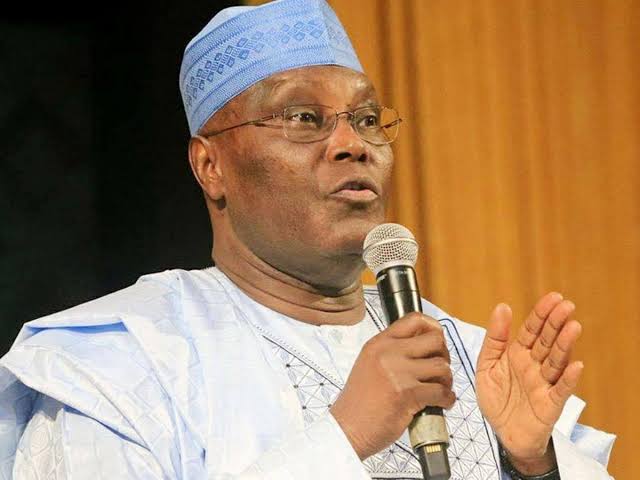
Paul Ibe, media adviser to former Vice President Atiku Abubakar, has questioned the Federal Government’s planning and financial coordination for the 750-kilometre Lagos–Calabar Coastal Highway.
Ibe raised the concerns in a post on Tuesday after Works Minister David Umahi reportedly explained that the highway was being designed and costed in sections rather than through a single engineering design covering the entire route.
The project is one of the major infrastructure initiatives of President Bola Tinubu’s administration and is intended to connect coastal communities across several states.
In his response, Ibe argued that although different sections of a long highway may require different engineering approaches, the government should be able to demonstrate that the overall project is supported by a coordinated and financially credible plan.
“Different terrain requires different designs. That is not the controversy,” Ibe wrote, questioning whether the administration had a clear plan for the entire project it had repeatedly promoted.
Debate Over Design and Project Planning
The Lagos–Calabar Coastal Highway is a major road project intended to improve transport links along Nigeria’s southern coastline.
Because the proposed route spans different geographical and environmental conditions, its individual sections may require different technical designs, construction methods and cost estimates.
However, Ibe’s criticism centres on whether section-by-section design and costing are being supported by a comprehensive project framework that sets out the full scope, estimated cost, construction sequence and funding arrangements.
The distinction is important: separate engineering designs for different sections do not automatically mean that a project lacks an overall plan. The key questions concern how the sections fit together, how the government manages their costs and how the project’s financial commitments are assessed.
Ibe called on the administration to provide greater clarity about the project’s overall planning and financial structure.
Transparency and Public Spending
The controversy raises wider questions about transparency in major public infrastructure projects, particularly those involving long construction timelines and substantial public expenditure.
Clear project documentation can help the public assess the estimated total cost, the responsibilities of contractors, the expected delivery schedule and the risks associated with delays or cost increases.
For a project of the highway’s scale, information about environmental assessments, land acquisition, engineering standards, financing and contract management is also important to evaluating its long-term viability.
The government has presented the coastal highway as a major transport and economic development initiative. Supporters argue that improved road links could strengthen commerce, reduce travel difficulties and connect communities along the coast.
Critics, however, have questioned aspects of the project’s planning, cost and implementation.
Government Response Remains Important
Ibe’s comments reflect the position of an opposition political aide and should be understood as criticism rather than an independent technical audit of the project.
Umahi’s reported explanation that the highway is being designed and costed section by section provides part of the context, but further documentation would be needed to assess the project’s overall engineering and financial arrangements.
The central issue is not whether each section has a distinct design, but whether the government can clearly explain how the individual sections form a coordinated project with transparent costs and credible delivery plans.
As construction continues, the availability of detailed project information will remain important to public scrutiny of one of the administration’s most prominent infrastructure commitments.