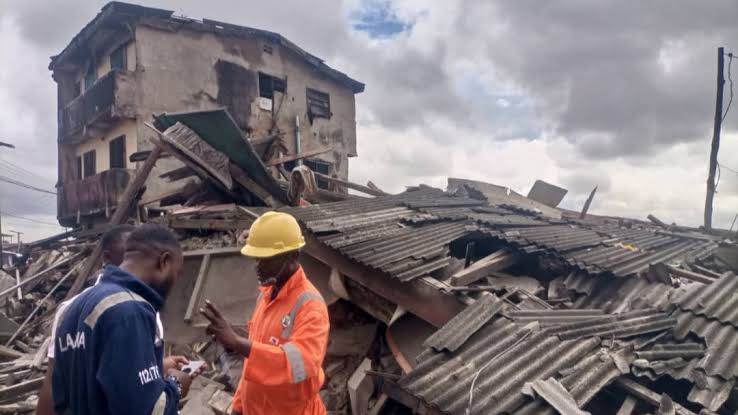
Five years after the collapse of a 21-storey building on Gerrard Road in Ikoyi, Lagos, the tragedy remains a stark reminder of the persistent dangers associated with building failures, inadequate regulatory enforcement and weaknesses in professional oversight across Nigeria’s construction industry.
The disaster occurred on November 1, 2021, when a high-rise building under construction at 42 Gerrard Road, Ikoyi, came crashing down, killing 44 people and leaving families devastated.
Construction workers, artisans, visitors and the developer, Femi Osibona, managing director of Fourscore Heights Limited, were among those trapped beneath the rubble.
The incident became one of the most devastating building collapses in Lagos in recent years, prompting renewed scrutiny of construction standards, building approvals, professional supervision and the enforcement of existing safety regulations.
Five years later, the scale of the problem remains troubling. Data cited by the Building Collapse Prevention Guild indicate that Lagos recorded between 50 and 52 additional building-collapse incidents between 2022 and 2026, underscoring the continuing risks facing residents, construction workers and property owners across the state.
Lagos Bears a Disproportionate Share of Building Collapses
The figures highlight the extent of the challenge confronting Lagos, Nigeria’s commercial capital and one of its most densely populated urban centres.
According to data from the Building Collapse Prevention Guild cited in a recent report, Nigeria recorded 817 building-collapse incidents between October 1971 and July 2026, with Lagos accounting for 477 of those cases.
Of the incidents recorded in Lagos, 325 occurred in occupied buildings, while 121 happened during construction. Another 31 were recorded at the end-of-life stage of buildings.
The figures point to a problem that extends beyond structures under construction. Buildings already occupied by residents and businesses also face risks when construction defects, structural deterioration or inadequate maintenance are not properly addressed.
For a city experiencing sustained demand for housing, commercial property and infrastructure, the consequences of building failure extend beyond the immediate loss of life. Collapses can destroy livelihoods, displace families, damage neighbouring properties and erode public confidence in the construction sector.
Questions Over Regulation and Professional Oversight
Building collapses often involve multiple factors, including structural design deficiencies, substandard materials, unauthorised alterations, excessive loading and inadequate supervision.
Determining the precise cause of any individual incident requires a proper technical investigation. Nevertheless, repeated failures raise questions about whether existing safeguards are being implemented effectively.
Building approvals, professional certifications and inspection procedures are intended to ensure that structures comply with applicable safety requirements. Their effectiveness, however, depends on consistent enforcement throughout the construction process.
Regulatory authorities must be able to identify violations, halt unsafe work and hold responsible parties accountable where breaches are established.
Professional bodies also have a role to play in promoting ethical practice and ensuring that architects, engineers, quantity surveyors and other specialists discharge their responsibilities in accordance with established standards.
The Ikoyi tragedy demonstrated the devastating consequences that can follow when a major construction project fails. The subsequent incidents suggest that preventing similar disasters requires sustained action rather than temporary public outrage after each collapse.
Beyond Public Promises: The Need for Accountability
The persistence of building collapses has strengthened calls for more effective inspections, stronger professional accountability and improved monitoring of construction projects.
Authorities also need reliable records of reported incidents, investigations, enforcement actions and corrective measures. Such information would help the public assess whether interventions are reducing the risks.
For property developers, compliance with approved designs and construction standards must remain a central obligation rather than an administrative formality. For regulators, identifying unsafe structures and enforcing remedial measures must take precedence over allowing preventable hazards to persist.
Public awareness is equally important. Prospective property buyers, tenants and investors need access to reliable information about building approvals, structural safety and the qualifications of professionals responsible for projects.
Five years after the Ikoyi collapse, the loss of 44 lives remains a painful reminder of what can happen when structural safety fails.
The continuing record of building collapses presents Lagos authorities and industry professionals with a clear challenge: to translate lessons from past disasters into measurable improvements in enforcement, accountability and public safety.
The ultimate test will not be the number of investigations announced after a collapse, but whether stronger safeguards prevent another tragedy.