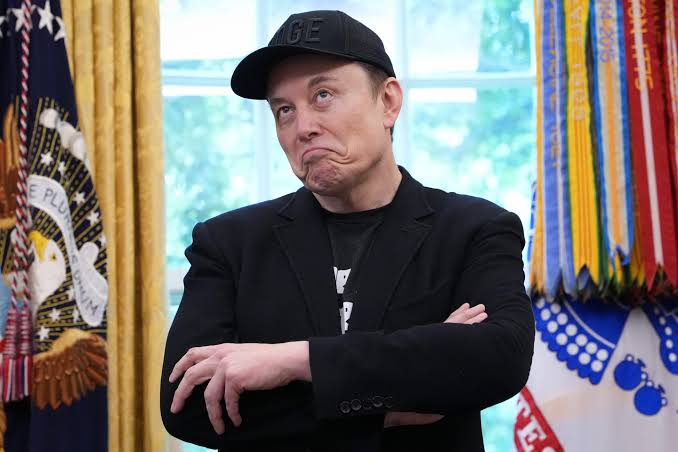
Billionaire entrepreneur Elon Musk has argued that saving money for the distant future could become unnecessary if artificial intelligence, robotics and advances in energy production deliver the widespread abundance he predicts.
Musk’s position is based on his expectation that technological developments could dramatically increase productivity, reduce the cost of goods and services, and transform how people work, earn money and plan for retirement.
The technology entrepreneur has previously suggested that people may not need to worry as much about retirement savings over the next 10 to 20 years if artificial intelligence develops as rapidly as he anticipates.
His argument centres on the possibility that increasingly capable AI systems and robots could produce goods and provide services at a scale that makes many of today’s financial concerns less significant.
Under this scenario, technological progress could improve access to healthcare, education, housing and other necessities, potentially reducing the amount of money individuals would need to maintain their standard of living.
Musk’s Vision of an AI-Driven Future
Musk has repeatedly expressed optimism about the long-term economic implications of artificial intelligence.
He believes that increasingly sophisticated AI systems, combined with robotics and improvements in energy generation, could significantly expand the world’s productive capacity.
In such a future, automation could reduce the cost of producing many goods and delivering services, while machines could undertake a growing share of tasks currently performed by human workers.
Musk’s broader vision includes the possibility of a society in which technological abundance changes the traditional relationship between employment, income and access to basic necessities.
However, these predictions remain dependent on developments that have not yet fully materialised.
Although AI is already being used across several industries, its long-term effects on employment, wages, productivity and the distribution of wealth remain uncertain.
Why Financial Experts Urge Caution
Musk’s argument has generated debate because it challenges conventional personal-finance advice, which generally encourages people to save consistently for retirement and unexpected expenses.
Financial experts have warned against treating predictions of future abundance as a reason to abandon savings plans.
Even if AI significantly increases productivity, the benefits may not be distributed equally. Access to housing, healthcare and other essential services will also depend on economic conditions, government policies, ownership of productive assets and the cost of living.
The transition to a highly automated economy could also create disruption, particularly for workers whose jobs are affected by technological change.
In addition, there is no guarantee that technological progress will eliminate financial insecurity within the timeframe Musk has suggested.
His comments should therefore be understood as a prediction about a possible future rather than established financial guidance.
The Future of Money and Work
The debate raises fundamental questions about how societies might organise their economies if AI and robotics eventually reduce the need for human labour across large parts of the economy.
Some possible outcomes include shorter working hours, changes in income-support systems and broader access to goods and services. However, achieving these outcomes would require more than technological innovation alone.
Governments, businesses and institutions would need to address how the gains from automation are shared and how people affected by economic changes are supported.
For individuals, the challenge is balancing optimism about technological progress with the financial realities of the present.
Musk’s vision suggests that the future could look radically different from today’s economy. Whether that transformation makes conventional saving less important, however, remains uncertain.
Until the economic consequences of AI become clearer, the prospect of future abundance does not remove the present need for careful financial planning.