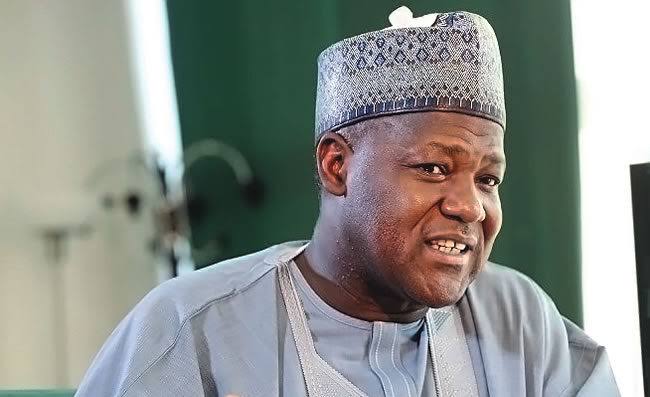
Former Speaker of the House of Representatives Yakubu Dogara has said Nigeria’s security challenges predate President Bola Tinubu’s administration, arguing that terrorism, insurgency, banditry and kidnapping have developed over many years and cannot be attributed solely to the government that assumed office in May 2023.
Dogara made the remarks at the 16th convocation ceremony of Achievers University, Owo, in Ondo State, where 836 graduands received various academic qualifications.
The former speaker, who serves as chancellor of the university, said Nigeria’s security crisis had deep-rooted causes, including porous borders, the proliferation of illegal weapons, youth unemployment and the spread of extremist ideologies.
He maintained that understanding the origins of the crisis was necessary for developing effective responses, while cautioning that acknowledging its history should not be interpreted as an excuse for the current administration’s security record.
“Insecurity in Nigeria did not begin with this administration. This is no excuse, because the facts need no defence. Terrorism, insurgency, banditry, kidnapping and communal violence did not arrive in 2023,” Dogara said.
His remarks come amid continuing public concern over attacks on communities, kidnappings, armed violence and insurgent activity in different parts of the country.
The comments also contribute to the wider debate over the extent to which Nigeria’s security challenges reflect longstanding structural weaknesses, the effectiveness of successive administrations and the ability of the present government to protect citizens.
A Crisis With Deep Historical Roots
Nigeria’s security problems have evolved over several years, with different regions experiencing distinct forms of violence.
The Boko Haram insurgency, which emerged in the North-East, has caused extensive loss of life, displacement and destruction of infrastructure. In other parts of the country, armed banditry, mass kidnappings and attacks on rural communities have created serious security concerns.
Communal violence and disputes involving land, resources and identity have also contributed to insecurity in several states.
Dogara identified porous borders and the proliferation of illegal weapons as factors that have made it difficult to contain armed groups. He also highlighted youth unemployment and extremist ideologies as issues that can contribute to instability.
These factors point to the complexity of Nigeria’s security challenges, which extend beyond military operations to include border management, intelligence gathering, policing, economic opportunity and the effectiveness of justice institutions.
Addressing such problems requires sustained coordination among security agencies, state governments, local authorities and communities.
Historical Context Does Not Remove Government Responsibility
Although Dogara argued that insecurity did not begin under Tinubu, he expressly stated that the historical origins of the crisis should not serve as an excuse for the present administration.
The distinction is important because governments are expected to respond to existing security threats regardless of when they began.
Tinubu assumed office in May 2023 with responsibility for national security, including the coordination of federal security agencies and the development of strategies to protect lives and property.
The effectiveness of his administration will therefore continue to be assessed through its response to attacks, its ability to disrupt armed groups, the protection of vulnerable communities and the extent to which citizens experience improved security.
At the same time, a comprehensive assessment must recognise that longstanding security problems cannot necessarily be resolved through isolated operations or short-term interventions.
Sustainable progress requires effective intelligence, adequate equipment, improved inter-agency cooperation, functioning judicial processes and measures to address the conditions that enable armed groups to operate.
Dogara’s remarks highlight the importance of considering both historical causes and present-day responsibility when evaluating Nigeria’s security situation.
The Role of Young Nigerians in National Development
Speaking at the university’s convocation ceremony, Dogara also congratulated the graduating students and urged them to apply their knowledge, creativity and talents to solving the country’s problems.
His message placed education and youth participation within the broader discussion about Nigeria’s future.
The graduation of 836 students represented an important milestone for the institution and its graduates, many of whom will be entering a challenging employment environment.
Dogara’s emphasis on innovation and national contribution also raises questions about how effectively Nigeria can translate educational achievement into productive employment and economic growth.
With youth unemployment and limited economic opportunities frequently identified as challenges facing the country, investment in education must be accompanied by policies that support job creation, entrepreneurship and skills development.
A Wider Debate Over Security and Governance
Dogara’s intervention comes as insecurity remains a major issue in public discussions about the performance of the Tinubu administration.
The former speaker’s central argument is that the crisis predates the current government and must be understood in its historical and structural context.
His remarks nevertheless acknowledge that the existence of longstanding problems does not absolve the government of its responsibility to protect Nigerians.
The broader challenge is to ensure that political debate over responsibility produces practical solutions rather than becoming a contest over blame.
For millions of Nigerians affected by violence, the priority remains effective protection, accountability for attacks and the restoration of safety in their communities.