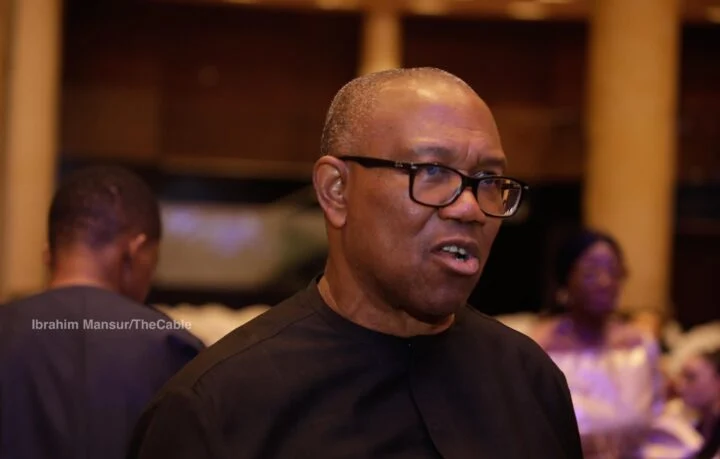
Presidential candidate of the Nigeria Democratic Congress (NDC), Peter Obi, has aligned himself with Pastor Enoch Adeboye’s recent assessment that President Bola Ahmed Tinubu has done his best to tackle insecurity. However, Obi argued that the President’s “best” is no longer sufficient for the country’s current challenges, insisting that Nigeria now needs leadership with greater capacity.
Nigeria’s 2027 presidential race has taken another dramatic turn after Peter Obi endorsed Pastor Enoch Adeboye’s widely discussed comments on President Bola Tinubu’s handling of insecurity, while simultaneously arguing that the country requires a different level of leadership.
Speaking during an interview with media personality Chude Jideonwo, Obi said he agreed with the respected cleric that President Tinubu had “tried his best,” but questioned whether that effort had been enough to reverse Nigeria’s worsening security situation.
Responding to questions about Adeboye’s earlier remarks, Obi described the General Overseer of the Redeemed Christian Church of God as a respected spiritual leader whose comments were sincere and fair.
According to Obi, the real issue is not whether Tinubu has made an effort, but whether those efforts have produced the results Nigerians expect.
“Pastor Adeboye was correct. He said the President has tried his best. The question is: Is his best good enough?” Obi said during the interview.
The former Anambra State governor argued that effective leadership requires competence, capacity, compassion, commitment and character, maintaining that Nigeria’s persistent insecurity demonstrates the need for a different approach.
He concluded that President Tinubu is “tired” and should “go home and rest.”
Obi’s remarks were made days after Pastor Adeboye defended President Tinubu against accusations that he had failed to address insecurity.
Speaking at the US-Nigeria Faith Heroes Award Gala in Washington, D.C., Adeboye argued that a commander-in-chief fulfils his responsibility by giving operational directives to security agencies rather than personally leading military operations. At the same time, the cleric acknowledged that insecurity remains a serious national concern.
Obi’s response reflects a nuanced position: he accepted Adeboye’s assessment that Tinubu has made an effort but contended that the administration lacks the capacity to achieve the outcomes Nigerians seek.
As of the time of this report, the Presidency had not issued an official response to Obi’s latest comments.
The interview forms part of Obi’s broader engagement with Nigerians ahead of the 2027 presidential election, during which he has continued to emphasise leadership competence and governance reforms as central themes of his campaign.
Obi’s endorsement of Adeboye’s assessment—while challenging the effectiveness of the President’s performance—adds another dimension to the national conversation on security and leadership. With political campaigns gathering momentum ahead of 2027, debates over competence, capacity and governance are expected to remain at the centre of Nigeria’s electoral discourse.