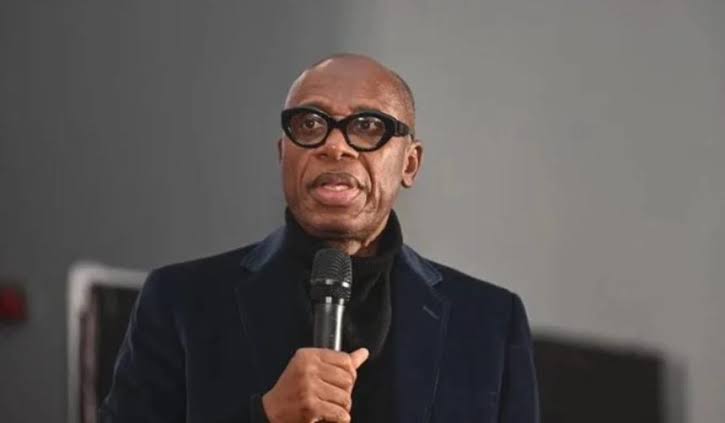
Former Rivers State governor and African Democratic Congress (ADC) vice-presidential candidate Rotimi Amaechi has challenged members of President Bola Tinubu’s economic team to an open debate over the administration’s economic policies, particularly the removal of the petrol subsidy and its consequences for Nigerians.
Amaechi issued the challenge during an ADC town hall meeting in Calabar, Cross River State, where he criticised the government’s handling of the economy and argued that the effects of its policies had placed considerable pressure on households and businesses.
The former transportation minister said he was prepared to debate any representative selected by the Federal Government to defend its economic decisions.
His challenge comes amid continuing political disagreements over the removal of the petrol subsidy, rising transportation costs and the government’s efforts to provide temporary relief to consumers.
Amaechi questions the handling of subsidy removal
Amaechi argued that the administration should have consulted economists, political scientists and other stakeholders more extensively before implementing a policy with far-reaching consequences for the economy.
He questioned the argument that removing the subsidy demonstrated political courage, warning that decisive action could become reckless when the consequences were not adequately considered.
“There’s a small line between courage and recklessness,” he said, according to a report of his remarks at the town hall meeting.
Amaechi maintained that the policy had contributed to increased transportation costs and worsened the financial pressure on Nigerians.
He also accused the administration of failing to provide sufficient protection for citizens affected by the change.
The government, however, has defended subsidy removal as part of its wider economic reform programme, arguing that the previous arrangement placed a heavy burden on public finances.
Calls for an open policy debate
In challenging the economic team, Amaechi said he was willing to defend his criticism in a public discussion, despite acknowledging that he was not an economist.
“Even though I’m not an economist, I’m still ready for a debate with anyone they will bring forward,” he said.
Such a debate would provide an opportunity to examine the rationale for the reforms, their effects on household incomes and businesses, and the measures available to reduce their adverse consequences.
The debate could also address the government’s fiscal position, the use of subsidy savings, inflation, employment and the sustainability of interventions designed to reduce fuel and transportation costs.
Economic hardship becomes a campaign issue
Amaechi’s intervention comes as political parties prepare for the 2027 general election, with the economy likely to remain a central issue in their campaigns.
Opposition figures have criticised the speed and consequences of the reforms, while government supporters have argued that the changes are necessary to address longstanding structural weaknesses.
The key question for voters is whether the policies can deliver sustainable economic improvements and whether the government has done enough to protect households during the transition.
Amaechi’s challenge has placed that debate directly before the administration’s economic team. Whether the government accepts the proposed public debate remains a separate question.