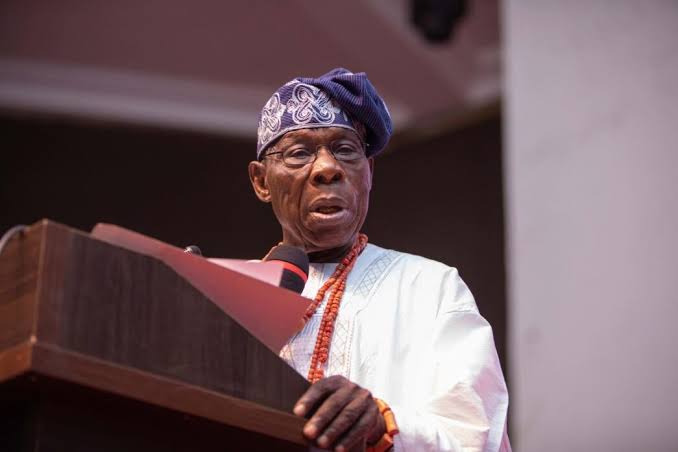
Former President Olusegun Obasanjo has criticised President Bola Tinubu’s economic reforms, arguing that the depreciation of the naira has worsened economic hardship and reduced the purchasing power of Nigerians.
Obasanjo made the remarks on Wednesday, October 21, 2026, while speaking at the Financial Times Africa Summit 2026 in London, United Kingdom.
During his intervention, the former president expressed concern about the effects of currency depreciation on households and businesses, arguing that the country’s economic difficulties had placed additional pressure on ordinary citizens.
He used the claim that Nigerians had become “poorer by 300%” to underscore his criticism of the economic situation and the consequences of the naira’s decline.
The comments add to the continuing national debate over the direction of Nigeria’s economic reforms, which have included the removal of petrol subsidies and changes to the foreign-exchange system.
The Tinubu administration has defended its reform programme as necessary to address longstanding structural weaknesses, improve public finances and create conditions for sustainable economic growth.
However, the transition has been accompanied by significant cost-of-living pressures, including concerns about food prices, transportation expenses, business operating costs and the ability of households to meet basic needs.
Obasanjo’s intervention raises questions about how the benefits and costs of the reforms should be assessed, particularly when considering their effects on different income groups.
The former president’s numerical claim that Nigerians have become poorer by 300% is a political and economic assertion that requires clarification of the measurement and evidence behind it. It should not be treated as an independently established statistic without supporting data.
The broader debate also centres on whether the government’s policies will eventually deliver improvements in living standards, strengthen the naira and stimulate investment and job creation.
As Nigeria approaches another election cycle, economic performance is likely to remain a major consideration for voters evaluating the administration’s record.