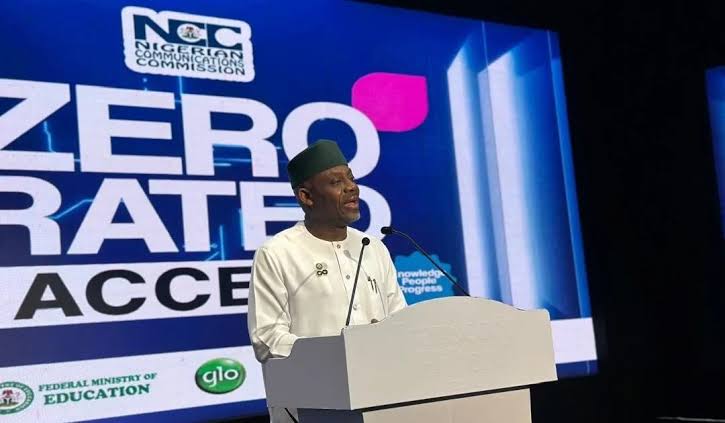
The Federal Government has announced that eligible Nigerian students will begin receiving 100MB of free internet data every day from October 1, 2026, under a new initiative designed to remove the cost of connectivity from digital education.
The Minister of Education, Dr Olatunji Alausa, announced the programme in Abuja during the launch of the Initiative for Zero-Rated Access to Educational Platforms and Content in Nigeria.
The initiative is being implemented in collaboration with the Nigerian Communications Commission (NCC), telecommunications operators and other stakeholders in the education and technology sectors.
Five Million Students to Benefit Initially
According to the government, the programme will initially cover about five million students in public senior secondary schools and tertiary institutions.
Beneficiaries will receive daily access to approved educational platforms without paying the normal data charges.
The government said the objective is to ensure that students from low-income households are not prevented from accessing online learning because they cannot afford internet data.
Alausa said the initiative represents a major step in the Federal Government’s digital education reforms.
He announced that the free allocation would begin on October 1.
Government Targets Digital Education Gap
The minister said poverty, geographical location and the cost of connectivity should not determine whether a Nigerian student can access educational resources.
The programme will focus on approved educational websites and platforms considered safe and relevant to the national curriculum.
The government also plans to expand the initiative to other categories of learners after the initial implementation phase.
The initiative comes as the Federal Government continues to digitise Nigeria’s education records and improve the identification and tracking of learners.
Alausa said more than 240,000 schools had already been geo-mapped and geolocated as part of the government’s broader education data reforms.
FG Plans Child Internet Regulation
Alausa also disclosed that the Federal Government is working on measures to regulate internet access for children below the age of 16 as part of efforts to strengthen online child protection.
The proposed measures are separate from the free educational-data initiative and are aimed at addressing concerns surrounding children’s exposure to potentially harmful online content.
The government has not yet provided all details of how the proposed restrictions would operate.
The move comes amid a growing international debate over children’s online safety, age verification, social media access and the responsibility of technology companies to protect minors.
Digital Access as Education Policy
The Federal Government said the zero-rating initiative is part of its wider effort to modernise education and ensure that technology becomes an important tool for teaching and learning.
The NCC has also said telecommunications operators are investing in network capacity and expanding coverage to underserved communities.
The government hopes the programme will enable students to access digital textbooks, academic resources and other approved learning materials without worrying about daily data costs.