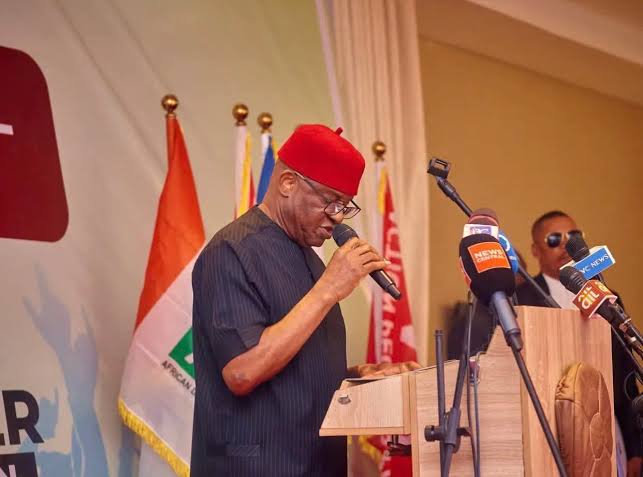
The Lagos State chapter of the All Progressives Congress (APC) has pledged to strengthen its political organisation ahead of the 2027 general elections, describing the outcome of the 2023 polls in the state as a wake-up call for the ruling party.
The state chairman, Cornelius Oyefolu Ojelabi, said the party was determined to consolidate its political position through intensified grassroots mobilisation and sustained engagement with voters.
Ojelabi made the remarks at the launch of the Iyaloja General Movement for Renewed Hope, where he expressed confidence that the APC would improve its electoral performance in Lagos during the next general election.
He said the party would work towards securing President Bola Ahmed Tinubu’s re-election while also defending its political strength in the state.
The APC chairman expressed confidence that stronger mobilisation would help the party defeat opposition figures, including former Anambra State Governor Peter Obi and former Vice-President Atiku Abubakar, whose political movements are seeking to challenge the ruling party in 2027.
His remarks reflect the importance of Lagos in the calculations of political parties ahead of the next presidential election.
Lagos is one of Nigeria’s most populous states and a major economic centre, making its voting patterns and political alignments significant to national electoral contests.
Although the APC has maintained a strong political presence in the state, the 2023 general elections demonstrated that opposition parties could attract considerable support among voters.
The outcome of that election has encouraged political parties to reassess their strategies, particularly in urban areas where economic concerns, public services, employment and the cost of living remain prominent issues.
For the APC, the challenge will be to translate its organisational strength into electoral support while addressing public concerns about the performance of the federal and state governments.
The party’s proposed strategy centres on grassroots engagement, coordination among its supporters and efforts to persuade voters to support Tinubu’s re-election bid.
Opposition parties, meanwhile, are expected to intensify their own campaigns in Lagos and other politically competitive states as the 2027 elections approach.
The contest is likely to be shaped by economic conditions, candidates’ credibility, party alliances and the ability of political organisations to mobilise voters across different communities.
While Ojelabi expressed confidence in the APC’s prospects, the eventual outcome will depend on voters’ decisions and the conduct of the electoral process.
Category: Politics, Elections
Tags: Lagos APC, Cornelius Ojelabi, Bola Tinubu, Peter Obi, Atiku Abubakar, 2027 Elections, Lagos Politics, Renewed Hope
- Tinubu Deserves Second Term, Oyebanji Says, Calls Opponents Enemies of Nigeria
Ekiti State Governor Biodun Oyebanji has declared that those opposed to President Bola Ahmed Tinubu’s re-election in 2027 are enemies of Nigeria, arguing that the President deserves another term because of his administration’s support for Ekiti State.
Oyebanji made the remarks on Thursday in Ado-Ekiti during a mega rally organised by the PBAT Door-to-Door Movement, where more than 20 vehicles were presented as part of efforts to mobilise support for Tinubu’s re-election campaign.
The event was convened by Niger Delta leader High Chief Government Ekpemupolo, popularly known as Tompolo.
The governor commended Tompolo for his role in mobilising political support for the President and urged Nigerians to recognise what he described as Tinubu’s contributions to Ekiti State.
Oyebanji maintained that the President’s support for the state was a reason to back his continued leadership beyond his current term.
His comments form part of the growing political mobilisation by supporters of the ruling All Progressives Congress ahead of the 2027 general elections.
Tinubu’s supporters have continued to argue that his administration requires additional time to consolidate its economic reforms and infrastructure programmes.
However, the President’s re-election bid is unfolding against a backdrop of public concerns over the cost of living, petrol prices, food affordability and the wider effects of economic reforms introduced since he assumed office in May 2023.
The administration has defended the reforms as necessary measures to address longstanding economic weaknesses, improve public finances and attract investment.
Critics, including opposition politicians, have questioned the pace at which the expected benefits are reaching ordinary Nigerians and have called for stronger measures to ease economic hardship.
Against this background, political leaders across the country have intensified efforts to build alliances and mobilise supporters ahead of the next election.
Oyebanji’s remarks underline the determination of Tinubu’s political allies to present the President’s record and relationships with state governments as reasons for his re-election.
However, the governor’s description of opponents as enemies of Nigeria is a political characterisation rather than an established fact. Opposition to an incumbent president’s re-election is a legitimate part of democratic competition.
As campaigning gathers momentum, the competing arguments over economic performance, infrastructure development, security and the welfare of citizens are expected to feature prominently in the national debate.