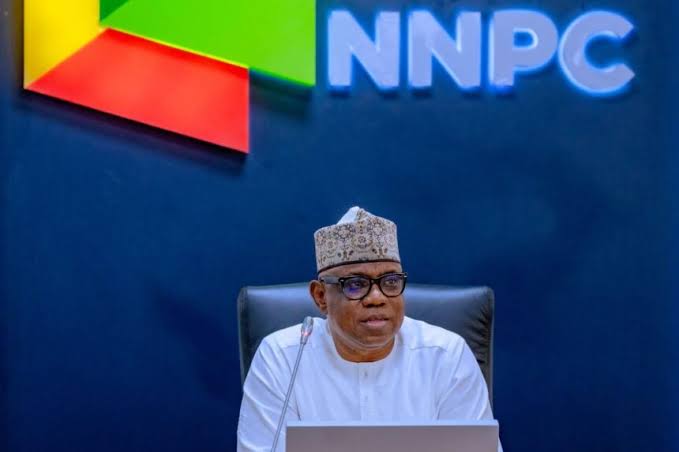

The Nigerian National Petroleum Company Limited (NNPC Ltd.) has set a medium-term target of increasing its annual crude oil trading volume to 430 million barrels as it intensifies efforts to improve profitability, strengthen capital efficiency and reposition its businesses for sustainable growth.
The Group Chief Executive Officer, Bashir Bayo Ojulari, disclosed the target while presenting the company’s performance and strategic outlook following the release of its audited financial results for the 2025 financial year.
The plan forms part of a broader transformation strategy focused on commercial performance, operational efficiency, portfolio optimisation and improved shareholder returns, according to the company.
Profit rises despite lower revenue
NNPC reported a profit after tax of ₦7.2 trillion for 2025, representing a 33 per cent increase from the ₦5.4 trillion recorded in 2024.
However, revenue fell by 24 per cent to ₦34.5 trillion, which the company attributed principally to lower crude oil prices and reduced sales of refined petroleum products following the deregulation of the downstream market in 2024.
Earnings before interest, taxes, depreciation and amortisation rose by 22 per cent to ₦18 trillion, while operating cash flow increased by 16 per cent to ₦12.8 trillion. The company also declared a dividend of ₦5.8 trillion, up 35 per cent from the previous year.
The figures show that the company recorded stronger earnings even as revenue declined, underscoring the importance of cost management, operating performance and changes in its business mix.
Oil and gas output records growth
NNPC said crude oil and condensate production averaged 1.77 million barrels per day in 2025, its highest level in five years. Natural gas production averaged 7.2 billion standard cubic feet per day, the highest in three years.
Total oil and condensate production reached 565.8 million barrels, an increase of five per cent, while the company’s equity share rose by 11 per cent to 223.7 million barrels.
Natural gas production increased by nine per cent to 2,606.2 billion standard cubic feet, while NNPC’s equity share grew by 11 per cent to 1,154.9 billion standard cubic feet.
Ojulari attributed the improved output to new wells, targeted interventions at oil assets, better asset integrity and stronger operational reliability. Gas production also benefited from improved field performance and maintenance activities.
The company said its gas business recorded growth in transmission and sales volumes, while liquefied natural gas volumes also increased.
Trading expansion and portfolio restructuring
The 430-million-barrel annual trading target is part of NNPC’s plans to expand its commercial activities and strengthen returns across its portfolio.
Ojulari also outlined upstream ambitions that include raising oil and condensate production to three million barrels per day and gas output to 12 billion standard cubic feet per day. These are targets rather than current production levels.
The company is also pursuing investments in gas infrastructure, compressed natural gas, shipping and refinery partnerships. Its strategy includes reviewing non-core and underperforming assets to determine how they can contribute more effectively to profitability and capital efficiency.
The performance figures and proposed targets come amid a global oil market shaped by price fluctuations, geopolitical tensions and changing supply levels among OPEC+ and non-OPEC+ producers.
Commercial performance remains the key test
NNPC’s reported profit growth provides a measure of its financial performance, but the sustainability of that growth will depend on production reliability, capital allocation, market conditions and the execution of its business strategy.
The proposed increase in crude trading volume will similarly require effective management of supply, trading operations and associated commercial risks.
The company’s next phase of transformation will therefore be measured not only by the targets it announces, but also by its ability to achieve them while maintaining financial discipline and delivering value from Nigeria’s oil and gas resources.