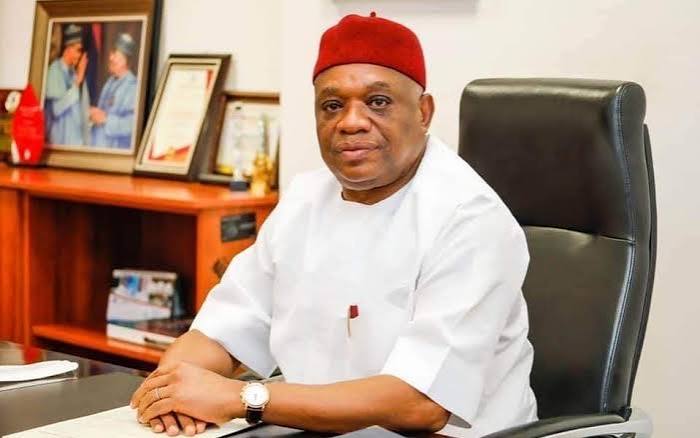
Senator Orji Uzor Kalu, Chairman of the Senate Committee on the South East Development Commission (SEDC), has insisted that the commission must operate from the South-East rather than Abuja, arguing that its presence should be felt directly in the region it was established to serve.
Kalu made the position known on Monday while leading members of his committee on an oversight visit to inspect the commission’s headquarters in Enugu State and assess the progress of its operations.
The senator, who represents Abia North Senatorial District and is a former governor of Abia State, expressed satisfaction with improvements at the headquarters since the committee’s previous engagements with the commission’s management.
He nevertheless urged the management to sustain the pace of work and ensure that the facility and the institution are positioned to fulfil their responsibilities.
Commission expected to maintain a strong regional presence
Kalu’s remarks reflect the importance of locating regional development institutions close to the communities and stakeholders they are intended to serve.
The South-East Development Commission was established to address development priorities in the region. Its effectiveness will depend on its ability to coordinate projects, engage state governments and communities, and ensure that interventions respond to identified local needs.
Operating from the South-East could also make it easier for the commission to maintain regular contact with regional stakeholders and monitor the implementation of development programmes.
However, the physical location of the headquarters is only one aspect of institutional effectiveness. Transparent project selection, sound financial management, measurable outcomes and accountability will also be essential to delivering tangible benefits.
Senate committee schedules another assessment
Kalu disclosed that the committee would return to Enugu in December to assess further progress at the headquarters.
The planned visit is expected to provide another opportunity to review developments and assess the commission’s readiness to carry out its mandate.
For residents of the South-East, the central question will be whether the commission can translate its institutional presence into visible improvements in infrastructure, economic opportunity and regional development.
The committee’s oversight role will remain important in monitoring progress and ensuring that the commission’s activities align with the objectives for which it was established.