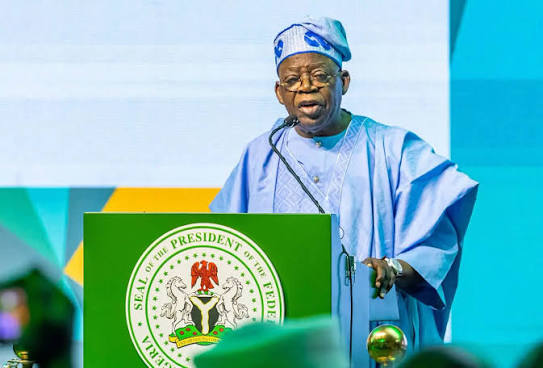

President Bola Ahmed Tinubu has ruled out restoring Nigeria’s petrol subsidy, declaring that his administration will not reverse the economic reforms introduced after he assumed office in May 2023.
Tinubu made the position clear in his Independence Day address on Thursday, October 1, as Nigeria marked its 66th anniversary. He defended the reforms and urged Nigerians to resist calls for a return to the previous subsidy regime.
President defends economic reforms
In his address, Tinubu argued that the reforms were intended to confront longstanding structural weaknesses in the economy rather than continue policies that, in his administration’s view, had failed to resolve underlying problems.
“Our reforms did not create the weaknesses in our economy. They confronted them,” the President said.
He described calls to return to what he termed “addictive subsidies” as an appeal to abandon the current policy direction.
Tinubu’s remarks reaffirm his administration’s position that petrol subsidy removal is a central part of its economic reform programme.
Cost-of-living concerns remain
The decision to end the petrol subsidy in May 2023 was followed by a substantial increase in the price of petrol, contributing to higher transportation and distribution costs.
Fuel prices affect a broad range of economic activities in Nigeria, including public transport, food distribution, small businesses and household spending. The impact is particularly significant for citizens who depend on commercial vehicles or petrol-powered generators.
While the administration has maintained that its reforms are necessary to address structural economic problems, households continue to face pressure from the cost of essential goods and services.
The debate over whether to restore, modify or replace the subsidy regime therefore remains closely connected to questions of inflation, public spending and the purchasing power of Nigerians.
What comes next?
Tinubu’s Independence Day declaration signals that his administration intends to maintain its current approach rather than return to the former petrol subsidy system.
The broader policy challenge is how to sustain economic reforms while reducing their immediate effects on households and businesses. Measures affecting public transportation, social protection, energy infrastructure and household incomes will remain important in determining how citizens experience the policy.
For now, the President has made his position clear: his administration does not intend to restore the petrol subsidy.