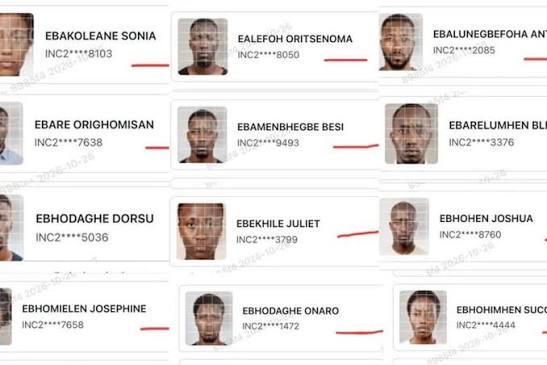
Former Vice-President Atiku Abubakar has criticised the Independent National Electoral Commission (INEC) following its disclosure that some registration officers introduced artificial intelligence-generated photographs and other questionable records into the preliminary national register of voters.
Atiku warned that the reported irregularities raised serious concerns about the electoral commission’s internal controls and its ability to safeguard the credibility of the 2027 general elections.
His reaction was contained in a statement issued on Friday by Phrank Shaibu, Director of Strategic Communication for the African Democratic Congress (ADC) Presidential Campaign Council.
The former vice-president argued that the presence of questionable records in the register demanded accountability and a comprehensive explanation from the electoral body.
According to him, INEC’s responsibility to protect the integrity of elections makes it imperative that irregularities within its registration system be investigated and addressed before the next general election.
Atiku described the development as a serious institutional failure, arguing that the commission must establish how the disputed records entered its database and identify those responsible.
His comments followed a disclosure by INEC’s Director of Information and Communication Technology, Dr Lawrence Bayode, who said some registration officers had allegedly used their official login credentials to introduce irregularities into the voter registration system.
Speaking during an interview on Arise Television, Bayode explained that the commission detected questionable entries through its Automated Biometric Identification System (ABIS).
He said some photographs were suspected to have been generated using artificial intelligence, while other records reflected poor registration practices.
Bayode also indicated that the commission had identified how some of the irregularities occurred, although the reasons behind the actions of the officers involved remained unclear.
The controversy emerged after screenshots of questionable voter records circulated on social media, prompting concerns about the authenticity of some entries in the preliminary register.
The development has intensified calls for greater transparency in voter registration and stronger safeguards against the introduction of fictitious or inaccurate information.
INEC has maintained that the register published online is preliminary rather than the final certified register. The commission has also said its verification and correction processes are intended to identify and address disputed records before certification.
The distinction is important because the discovery of irregularities in a preliminary register does not, by itself, establish the number of affected records or determine whether they would influence the outcome of an election.
Nevertheless, the disclosure places renewed attention on the commission’s responsibility to ensure that only eligible voters are properly registered and that the electoral process remains transparent and credible.
With the 2027 general elections approaching, INEC faces growing pressure to explain the lapses, correct verified errors and demonstrate that the final register will meet the standards required for a credible election.