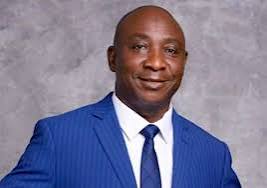
President of the Nigeria Football Federation (NFF), Ibrahim Musa Gusau, has resigned from office amid mounting criticism of Nigeria’s recent football performances and failures to qualify for major international tournaments.
Gusau’s resignation was confirmed on Thursday, August 27, 2026, with NFF General Secretary Mohammed Sanusi and members of the federation’s executive committee also stepping down.
Gusau, who became NFF president in 2022, said he took the decision after consultations with stakeholders and his family.
The leadership shake-up follows intense pressure on the football administration after the Super Eagles failed to qualify for the 2026 FIFA World Cup and the Super Falcons missed the 2027 FIFA Women’s World Cup.
The Falcons’ failure was particularly significant because Nigeria’s women’s team had qualified for every edition of the Women’s World Cup since the competition began in 1991. Their elimination came after a playoff defeat to South Africa.
The Super Eagles also suffered disappointment after losing a World Cup qualification playoff to the Democratic Republic of Congo on penalties, ending Nigeria’s hopes of appearing at the 2026 tournament.
The NFF had already established a fact-finding committee to examine the country’s recent poor performances and identify issues affecting the national teams.
Gusau’s resignation now creates a leadership vacuum at a particularly sensitive moment for Nigerian football. The federation’s elective congress is scheduled for September 27 in Lafia, meaning the transition will take place only weeks before the planned election.
The former NFF president defended his tenure while announcing his departure, pointing to economic difficulties and currency volatility as factors that had affected the federation.
His resignation also comes amid wider questions surrounding the administration and financing of Nigerian football, although the immediate trigger for the leadership crisis has been the national teams’ disappointing competitive record.
With Gusau and other members of the executive committee gone, attention will now shift to how the federation manages the transition and whether the next leadership can restore confidence in Nigeria’s football system.
The development also coincides with President Bola Tinubu’s directive for a comprehensive reform of Nigerian football, including changes to governance, administration, player-development pathways, domestic competitions and accountability.