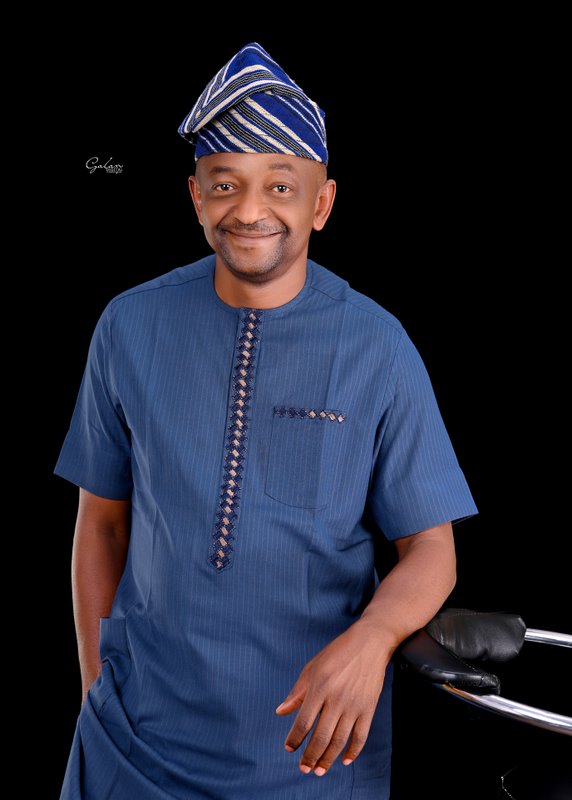
Former House of Representatives member and Peoples Democratic Party (PDP) chieftain Timothy Golu says Nigeria’s political landscape is gradually becoming more competitive as preparations for the 2027 general elections intensify.
Golu, who is seeking the PDP ticket to represent Plateau Central Senatorial District, said the political atmosphere had moved beyond earlier fears that Nigeria was drifting towards a one-party system.
Speaking in an interview with North-Central Bureau Chief Isaac Shobayo, Golu said political actors across different parties were now actively positioning themselves for the next general election.
“So far, it is so good, because what started with an impression of a one-party system is now giving way to a level where everybody, every political player under different political parties, is involved,” Golu said.
He added that it had become increasingly clear that Nigerians would have competing political options when they go to the polls.
PDP Crisis Remains a Major Test
Golu’s assessment comes against the backdrop of prolonged internal disputes within the PDP, which has struggled with factional disagreements and questions over its leadership structure ahead of 2027.
The former federal lawmaker has previously argued that there is no need for the party to remain consumed by claims of confusion over its leadership, insisting that political disagreements should ultimately be resolved through the rule of law.
In an earlier interview, he said democracy could not function when political actors deliberately created the impression that institutions were incapable of resolving disputes.
The PDP has also been attempting to rebuild its structures at state level as it prepares for the 2027 contest.
In Plateau State, the party has already screened its senatorial aspirants ahead of the elections, with Golu emerging as the consensus candidate for Plateau Central alongside Johnbuil Shekarau for Plateau South and Formson Godson Dalyop for Plateau North.
Wike’s Support for Tinubu
The political debate has also been complicated by the decision of some prominent opposition politicians to support President Bola Ahmed Tinubu for a second term.
Among the most prominent is FCT Minister Nyesom Wike, a PDP member who has publicly backed Tinubu’s 2027 re-election bid despite remaining outside the APC.
Golu said political actors were entitled to make their choices based on their convictions, describing Wike’s position as an expression of political belief rather than something unprecedented in Nigerian politics.
He argued that politicians had previously served administrations led by members of other parties without abandoning their own political identities.
The issue has, however, created considerable tension within the PDP, where some members believe Wike’s continued support for Tinubu undermines the opposition party’s efforts to challenge the APC in 2027.
Beyond Party Labels
Golu’s comments also reflect a broader argument about Nigerian politics: that political alliances are increasingly being shaped by individual interests, political calculations and perceptions of national interest rather than strict party loyalty.
The emergence of cross-party alliances has already become one of the defining features of the 2027 political landscape.
While some opposition politicians have moved closer to Tinubu, others have joined emerging opposition coalitions seeking to challenge the president.
The result is a political environment in which party structures remain important, but individual politicians and political movements are increasingly capable of reshaping traditional alliances.
Golu’s Senate Ambition
For Golu, the political developments are also unfolding alongside his own bid to return to the National Assembly.
The former lawmaker is the PDP’s consensus candidate for Plateau Central Senatorial District.
His political experience includes service in the House of Representatives, where he represented the Pankshin/Kanke/Kanam federal constituency.
His return to electoral politics comes at a time when Plateau’s political landscape is also witnessing significant competition between the PDP and APC.
The PDP remains influential in the state, but the party has faced internal disputes while the APC continues to strengthen its structures.
A More Competitive 2027?
Golu’s assessment that Nigeria is moving away from an apparent one-party trajectory reflects one of the major debates surrounding the 2027 election.
The APC currently controls the presidency and has attracted support from politicians outside its traditional political base.
At the same time, opposition forces are attempting to consolidate around different platforms and candidates.
Whether those efforts will produce a credible alternative to the governing party remains one of the central questions ahead of the election.
For Golu, however, the most important development is that political competition appears to be returning to the centre of the national conversation.
With different parties, coalitions and political personalities already positioning themselves, the 2027 contest is shaping up as a battle that will extend beyond conventional party lines.