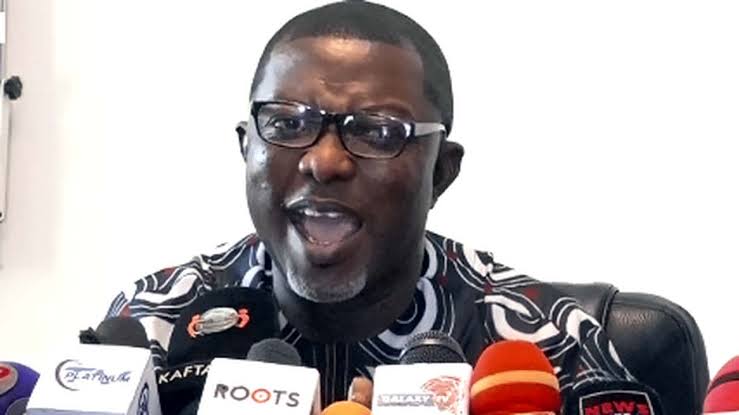
Labour Party chieftain Abayomi Arabambi has dragged the University of Nigeria, Nsukka (UNN) before the Federal High Court in Abuja over the institution’s alleged refusal to release academic records relating to former Anambra State governor and Nigeria Democratic Congress (NDC) presidential candidate Peter Obi.
Arabambi is asking the court to compel the university to respond to his request for certified copies of Obi’s academic records under the Freedom of Information Act, 2011.
The suit, marked FHC/ABJ/CS/2144/2026, was filed on September 9, 2026, through Arabambi’s lawyer, Anderson Asemota.
What Arabambi Requested
According to court documents cited in reports, Arabambi requested a Certified True Copy (CTC) of a UNN certificate bearing number D000198, which he says was issued in 1984 in respect of a Bachelor of Arts degree in Philosophy.
He also requested the academic record or other official documentation upon which the degree was based.
The request was reportedly made in a letter dated July 16, 2026, and delivered to the university on August 6.
Arabambi said the request was made pursuant to the Freedom of Information Act and was based on what he described as public-interest and accountability considerations.
He alleged that UNN did not provide the requested records within the period prescribed by the law.
Reminder Sent to University
The Labour Party chieftain said he subsequently sent a reminder to the university on August 31, again requesting the documents.
According to the court documents, the reminder was received on September 1.
Arabambi alleged that the university neither supplied the requested documents nor issued a written notice explaining its refusal under a specific provision of the Freedom of Information Act.
He is therefore asking the court to issue an order of mandamus compelling the respondents to determine and respond to his FOI request in accordance with the law.
The case names the Vice-Chancellor and the University of Nigeria as respondents.
Why Obi’s Academic Records Are in Focus
The legal action comes against the backdrop of previous controversies surrounding variations in the names appearing on documents associated with Peter Obi.
Previous reports have noted that a copy of a WAEC certificate attributed to Obi bears the name “Obi Gregory Onwubuasi,” while his UNN certificate reportedly carries “Gregory Peter Onwubuasi Obi” and his NYSC certificate reportedly uses “Obi, Gregory Peter Onwubuasi.”
Arabambi has previously raised questions about those differences and has repeatedly demanded clarification.
He was also involved in earlier political controversies over Obi’s credentials while serving in the Labour Party faction led by Lamidi Apapa.
However, allegations surrounding variations in names on official documents do not, by themselves, establish academic fraud or certificate forgery.
Earlier Allegations
The controversy is not new.
In 2023, Arabambi alleged that discrepancies existed between Obi’s UNN and NYSC records, prompting a response from Obi’s political camp.
A spokesman for the Obi-Datti campaign organisation, Yunusa Tanko, rejected allegations that Obi forged a university certificate and defended his credentials.
The Nation also reported at the time that documents attributed to Obi contained different arrangements of his names, while the Labour Party’s internal factions disagreed over the significance of those differences.
The latest lawsuit, however, moves the dispute from political statements into the courtroom.
What the Court Is Being Asked to Decide
Arabambi is not asking the court, at this stage, to determine whether Obi’s academic credentials are genuine.
Rather, the central issue in the case is whether UNN failed to properly respond to his request for information under the Freedom of Information Act.
He is seeking an order compelling the institution to formally determine and respond to his request.
The distinction is important because access to records and the substantive authenticity of those records are separate legal questions.
If the court grants the relief sought, the university could be required to address the FOI request in accordance with the law.
Political Implications
The case could nevertheless have political implications because Obi is preparing to contest the 2027 presidential election.
Questions surrounding the credentials of presidential candidates are often politically sensitive, particularly after the extensive controversy over President Tinubu’s academic records during and after the 2023 election.
Obi has remained a major opposition figure and is now the NDC’s presidential candidate for 2027.
The lawsuit could therefore add another layer to the increasingly intense political scrutiny surrounding candidates ahead of the next presidential election.
For now, however, the case remains at its early stage.
Reports indicate that it had yet to be assigned to a judge at the time of publication.
The court will ultimately determine whether Arabambi’s request meets the requirements of the Freedom of Information Act and whether the university has a legal duty to provide the information sought.