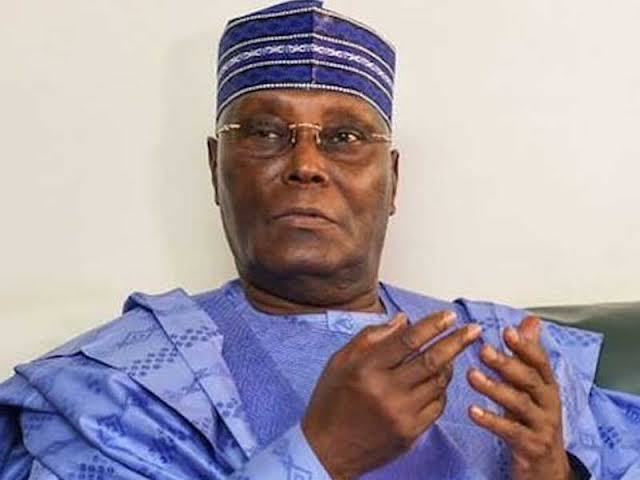
Former Vice President Atiku Abubakar has blamed the Tinubu administration’s economic policies for what he described as a worsening cost-of-living crisis in Nigeria.
Atiku made the claim while addressing a World Press Conference in Abuja, where he criticised the removal of the petrol subsidy and its effects on transportation, food prices, businesses and household purchasing power.
“Tinubu did not inherit this cost-of-living crisis from Nigerians. His policies created and deepened it,” Atiku said.
Atiku points to rising prices
The ADC presidential candidate argued that the removal of the petrol subsidy had produced a chain reaction across the economy.
According to his assessment, higher petrol prices have increased transportation costs, while higher transportation and energy costs have added to the cost of moving and producing food.
He also cited increases in the prices of fertiliser and cement, as well as changes in the exchange rate, as evidence of the pressure facing households and businesses.
Atiku said Nigerians were experiencing higher expenses while disposable incomes had failed to keep pace.
He argued that businesses were also struggling because consumers had less purchasing power.
Production subsidy proposal
Atiku renewed his call for a production subsidy focused on petroleum products refined domestically.
His proposal, he said, would support local refining while increasing supply and reducing the price burden on consumers.
He cited the position of the Crude Oil Refinery Owners Association of Nigeria (CORAN), which he said supports measures to strengthen domestic refining.
Atiku also pointed to interventions in strategic energy sectors in other countries as examples of government support for domestic production.
Government’s position differs
The Tinubu administration has defended the removal of the petrol subsidy as a major economic reform intended to end the fiscal burden associated with the subsidy regime and redirect public resources.
The government’s position differs fundamentally from Atiku’s assessment of the reform’s effects.
Atiku, who is seeking the presidency in 2027 under the ADC, has made economic relief and lower living costs central elements of his criticism of the administration.
His latest comments therefore form part of an ongoing political and economic debate over the consequences of the Tinubu administration’s reforms.