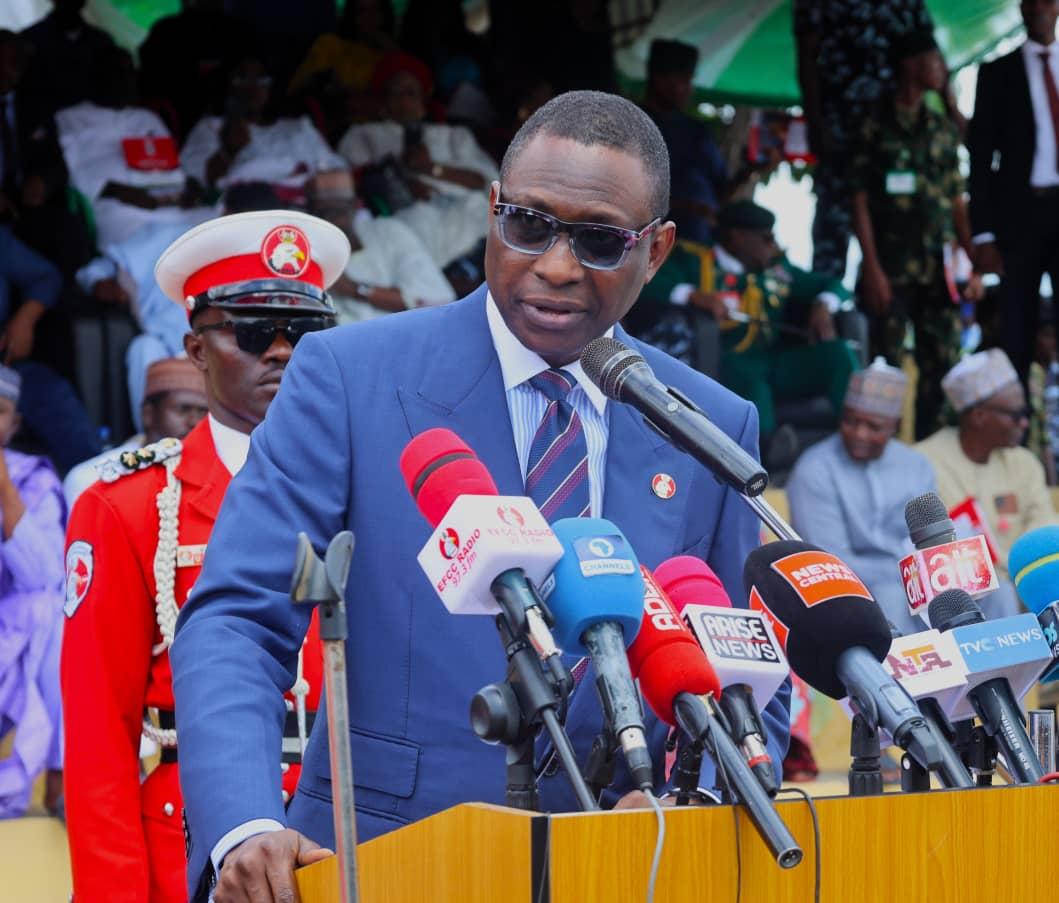
The Chairman of the Economic and Financial Crimes Commission (EFCC), Ola Olukoyede, has raised fresh concerns over the scale of public-sector corruption in Nigeria, saying some public officials divert national resources “every minute.”
Olukoyede made the remarks on Thursday in Abuja at an event marking the 80th birthday of former Attorney-General of the Federation and Minister of Justice, Kanu Agabi.
The EFCC chairman said the commission receives more than 20,000 petitions relating to public corruption annually, describing the volume and nature of the cases as deeply troubling.
He argued that corruption remains a major obstacle to national development, particularly when individuals enter public office with modest personal resources and leave with substantial assets that investigators are able to trace to them.
According to Olukoyede, some public servants accumulate large numbers of properties and significant financial assets during relatively short periods in office.
‘No Nation Can Develop This Way’
The EFCC chairman linked the diversion of public resources to Nigeria’s broader development challenges, stressing that public officials should be required to account for their stewardship.
He called for greater accountability and transparency in public service and urged Nigerians to reject practices that allow public resources to be diverted for private benefit.
Olukoyede’s remarks come amid continued efforts by anti-corruption agencies to investigate and prosecute alleged financial crimes involving public officials and other individuals.
He also pointed to the need for stronger public awareness and collective resistance to corruption.
Corruption and Institutional Reform
The chairman of the Independent Corrupt Practices and Other Related Offences Commission (ICPC), Musa Adamu Aliyu, who also spoke at the event, attributed the persistence of corruption partly to societal tolerance and weaknesses within institutional systems.
He advocated integrity education from an early age, arguing that efforts to combat corruption must go beyond prosecution and address the values and systems that allow corrupt practices to persist.
Olukoyede’s comments therefore form part of a broader debate over enforcement, institutional accountability and the prevention of corruption in Nigeria.