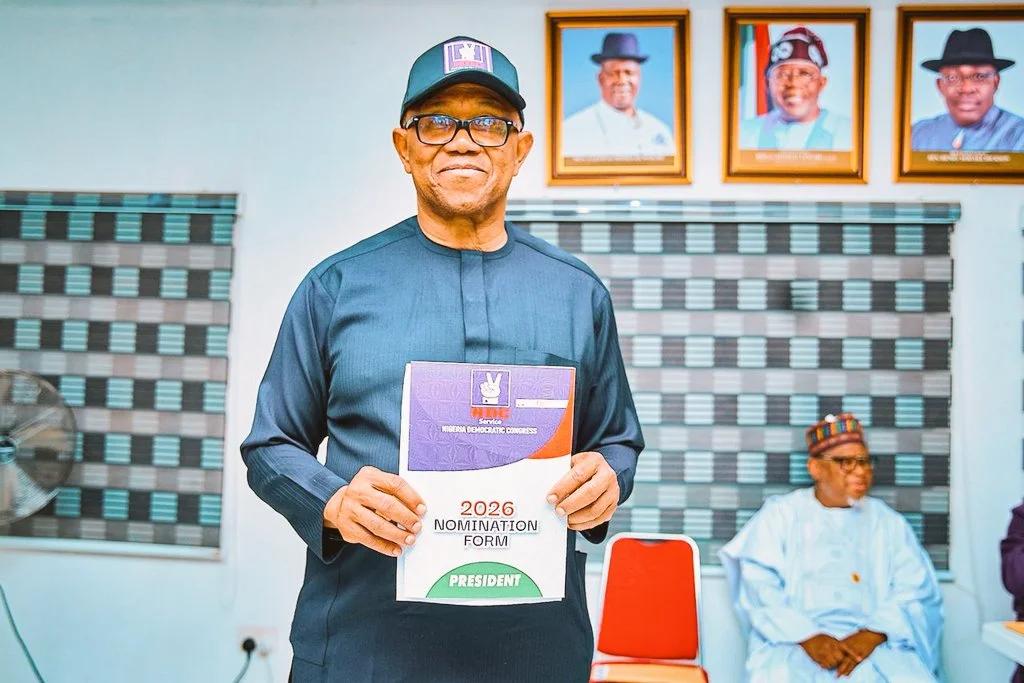
The Presidency has accused supporters of Peter Obi, the Nigeria Democratic Congress (NDC) presidential candidate, of shielding him from public scrutiny amid the continuing dispute over the financial obligations associated with his tenure as governor of Anambra State.
Bayo Onanuga, Special Adviser to President Bola Ahmed Tinubu on Information and Strategy, made the allegation in a series of posts on X on Saturday, September 26, 2026.
Onanuga argued that some of Obi’s supporters defended him whenever his claims were challenged and used the expression “licence to lie” to characterise what he regarded as their response to criticism.
The remarks have added a new dimension to a dispute that centres on the interpretation of historical external financing and the financial position of Anambra State when Obi left office in March 2014.
Anambra Debt Figures at the Centre of Dispute
The controversy intensified after the Anambra State Government published information about external financing facilities associated with development projects undertaken during Obi’s administration.
The state government said eight facilities had a combined contracted value of approximately $123.77 million, with about $92.35 million outstanding as of June 30, 2026, based on figures it attributed to the Debt Management Office.
Obi rejected the description of the full contracted value as loans he left behind. He argued that the government had combined different financing categories without distinguishing the total value approved for multiyear programmes, the amounts actually drawn by the state and the outstanding balances at the end of his tenure.
The disagreement highlights the importance of distinguishing between a financing facility’s approved or contracted value and the amount actually disbursed or outstanding at a particular date.
These figures are related but are not interchangeable accounting measures.
Obi’s Response to the Allegations
Obi has maintained that he did not personally obtain conventional loans or issue bonds for Anambra State during his administration.
He argued that the facilities involved development programmes, including arrangements associated with multilateral institutions and subsidiary financing agreements involving the Federal Government and participating states.
He has also maintained that the state’s financial responsibilities under those programmes must be distinguished from the assertion that he personally borrowed the full amount cited by his successors.
The state government’s position, by contrast, is that outstanding liabilities associated with the facilities should be acknowledged and explained.
The central issue is therefore not simply whether financing facilities existed, but how they were structured, what amounts were drawn, what repayment obligations remained and how those obligations should be attributed in the state’s financial records.
Presidency Enters the Dispute
Onanuga’s intervention shifts the debate beyond the technical interpretation of public debt into a broader political exchange involving Tinubu’s administration and a leading opposition presidential candidate.
By criticising Obi’s supporters, the presidential adviser argued that political loyalty should not prevent public figures from being questioned about their records in office.
However, his characterisation of Obi and his supporters remains an allegation and political assessment, rather than an independent finding about the accuracy of every claim made by either side.
A definitive assessment of the disputed figures would require examination of the underlying financing agreements, disbursement records, repayment schedules, audited accounts and relevant Debt Management Office documentation.
Accountability and Public Records
The dispute has renewed attention to the standards expected when former officeholders and current governments discuss inherited financial obligations.
Public debt reporting requires clarity about the borrower, the lending institution, the purpose of the facility, the amount disbursed, the repayment terms and the outstanding balance at the relevant date.
These distinctions are important because a programme’s total approved financing may differ from the amount drawn by an individual state, while repayment obligations may continue beyond the tenure of the administration under which a programme began.
As the controversy continues, the quality and completeness of the underlying documentary evidence will be central to resolving competing interpretations.