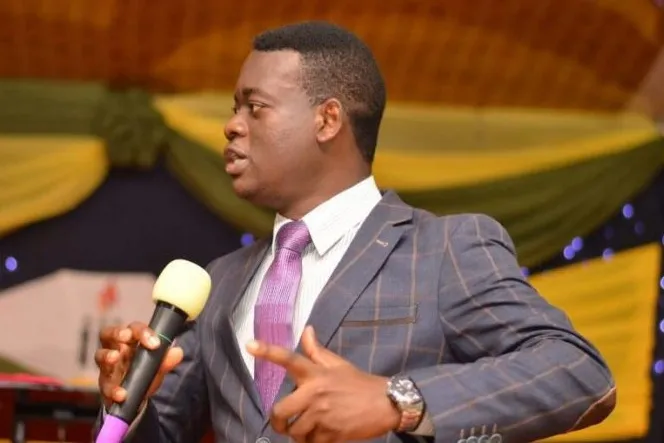
Apostle Arome Osayi has responded to the controversy surrounding an old video clip in which he described Nigeria as a “revival and prayer country,” saying the footage currently circulating online was taken out of context.
The remarks have generated renewed discussion following the cleric’s relocation to the United States, with critics questioning the apparent contrast between his comments about Nigeria’s spiritual calling and his decision to move abroad. Recent reports said the controversy intensified after a short clip from one of his sermons circulated widely on social media.
Speaking in response to the backlash, Arome said he had never presented himself as a perfect person or claimed to be above mistakes.
“We are not saying that we don’t make mistakes sometimes, because I’m not saying that I’m a living perfect master. I’m the best thing that happened. No,” he said.
The cleric, however, maintained that there are standards governing the communication and teaching of Scripture.
He argued that while ministers may have human limitations, there is a minimum scriptural standard for communicating what he described as the mind of God through the Bible.
“But a scripture has a minimum standard of what is acceptable ministry in the service delivery of the Word, the mind of God, through the platform of scriptures. There’s a minimum requirement,” he said.
Arome Says Clip Was Taken Out of Context
Arome also criticised the practice of extracting short portions of statements from longer messages and presenting them without the surrounding context.
“Every truth exists in a context. So they take a window that is dissociated from its context and try to present me,” he said.
The controversy centres on an earlier message in which Arome discussed what he described as Nigeria’s spiritual calling. Reports on the viral clip said he portrayed Nigeria as having a particular role in revival and prayer, rather than seeking to emulate countries such as China in technological development.
The remarks have since prompted debate among Nigerians online, with different commentators offering contrasting interpretations of what the preacher meant.
Wider Debate Over Religious Commentary
The controversy has also generated discussion about the responsibilities of religious leaders when making statements on national development, spirituality and Nigeria’s future.
Arome’s response indicates that he believes the disputed clip should be understood within the broader context of the original message rather than as an isolated statement.
He has not, however, suggested that he is incapable of making mistakes, instead distinguishing between human fallibility and what he regards as the scriptural standards expected of Christian ministry.
The debate remains active online as Nigerians continue to examine both the original sermon and the cleric’s subsequent explanation.