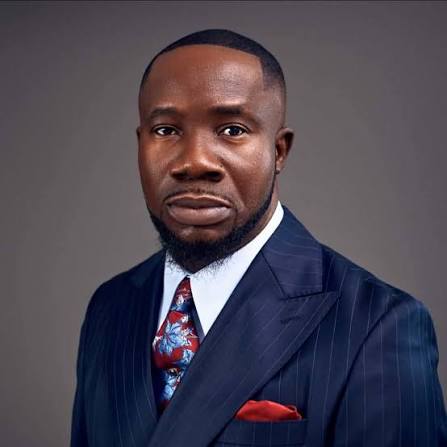
Apostle Harrison Ayintete has defended the collection of tithes in churches, arguing that members should contribute 10 per cent of their income to support the financial responsibilities and day-to-day operations of their religious institutions.
The cleric made the remarks amid ongoing discussions among Christians about the biblical basis of tithing, the use of church funds and whether the practice should be regarded as a compulsory obligation for believers.
Ayintete maintained that churches have financial commitments that must be met to sustain their activities, including purchasing diesel, acquiring equipment, maintaining facilities and funding other operational requirements.
He argued that rather than focusing exclusively on theological debates about Melchizedek and Old Testament teachings, Christians should also consider the practical needs of running a church.
“There is no scripture that says a church cannot give twenty per cent or give thirty per cent. If the early church could come together and say we are selling our land and we are giving everything, so we can also come together and say we are doing ten per cent,” he said.
The cleric maintained that collective contributions were necessary to sustain religious institutions and support their activities.
“So let us leave Melchizedek out of the conversation. Leave Old Testament out of the conversation. Let us talk about it like we are talking about a barbing community. Or we are talking about hairdressing community. Or we are talking about estate community,” he said.
Ayintete also highlighted the everyday expenses associated with running a church, questioning whether congregations could continue their activities without financial support from members.
“We have a church to run, yes or no? There is diesel to buy, yes or no? There’s microphone to buy, yes or no?” he added.
He further stated that his church had adopted a policy under which members were expected to contribute 10 per cent of their individual incomes.
“As a church, we have said that ten per cent of individual members’ income is what we cater to what we need in this church. And you must give it. If you say you are a member, you give it,” Ayintete said.
He concluded by describing the contribution as a levy established by the institution to meet its operational needs.
The Continuing Debate Over Tithing
Tithing remains a subject of theological disagreement among Christian denominations and individual believers.
Some churches teach that giving a tenth of one’s income is an important expression of faith, obedience and support for religious work. Others emphasise voluntary giving and interpret biblical passages about tithes differently, particularly when considering the relationship between Old Testament laws and Christian practice.
The debate also encompasses questions about financial accountability, the transparency of church spending and the responsibilities religious leaders have towards their congregations.
Ayintete’s comments reflect his position on how his church should be funded. They do not establish a universal requirement for all Christian denominations or congregations.
For church members, the discussion raises questions about religious conviction, institutional policies and the importance of understanding how contributions are collected and used.
As debates about tithing continue, the issue remains one on which Christians hold differing interpretations, shaped by their theological traditions and individual beliefs.