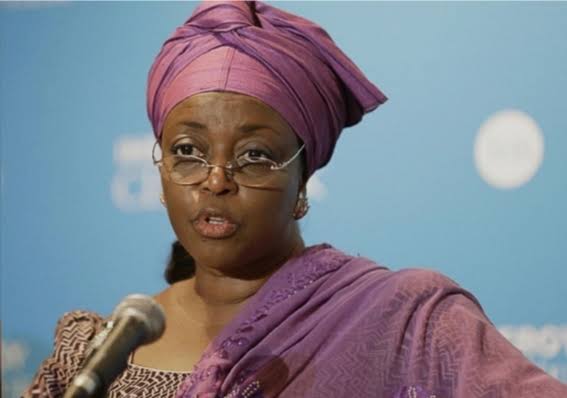
The Economic and Financial Crimes Commission has opposed an application by former Petroleum Minister Diezani Alison-Madueke seeking to present evidence of her acquittal by a United Kingdom court in an ongoing Nigerian legal dispute over assets.
The EFCC asked Justice Inyang Ekwo of the Federal High Court in Abuja to dismiss the application, arguing that the UK judgment was not relevant to the specific issues before the Nigerian court.
The commission’s position was contained in a further counter-affidavit filed in response to Diezani’s application.
The former minister is seeking to introduce the judgment of the Southwark Crown Court in London, which discharged and acquitted her in June 2026 following her trial on criminal allegations of bribery in the United Kingdom.
The Nigerian proceedings, however, concern assets that Diezani is seeking to recover from the Nigerian authorities.
Earlier in the proceedings, the Federal High Court granted Diezani permission to present evidence relating to her UK acquittal. The EFCC did not oppose that application at the time.
The latest objection represents a different procedural position by the commission as the Nigerian case progresses.
The EFCC now argues that an acquittal by a foreign criminal court does not automatically determine the issues before the Nigerian court, particularly where the proceedings involve asset recovery and questions governed by Nigerian law.
The distinction is legally significant because the UK criminal case and the Nigerian asset proceedings are separate matters.
Diezani has maintained her legal challenge over assets previously forfeited to the Nigerian government, while the EFCC continues to defend its position before the Federal High Court.
The court will determine whether the UK judgment has sufficient relevance to be considered in the Nigerian proceedings.