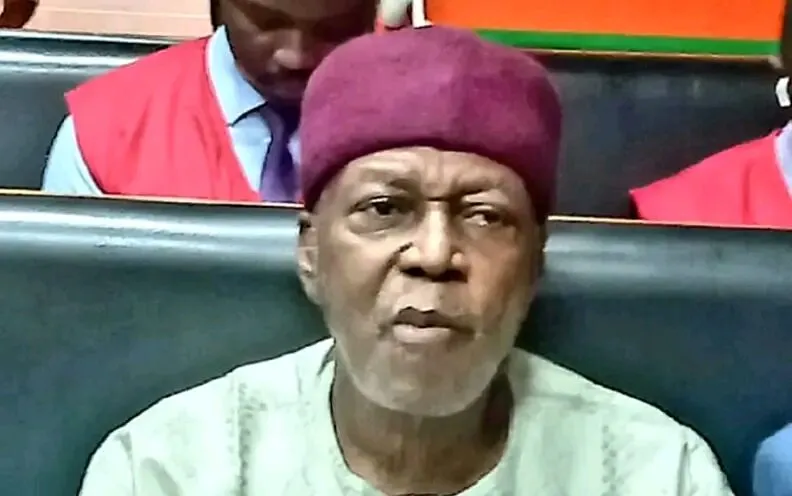
A prosecution witness in the ongoing trial of former Taraba State Governor Darius Dickson Ishaku and former Permanent Secretary Bello Yero has told an Abuja court how funds were allegedly transferred into his personal bank accounts during Ishaku’s tenure.
The witness, Taiwo Jones, an assistant cashier with the Taraba State Bureau for Local Government and Chieftaincy Affairs, gave the evidence while testifying before the High Court of the Federal Capital Territory in Maitama.
Ishaku and Yero are being prosecuted by the Economic and Financial Crimes Commission over a 15-count charge bordering on alleged criminal breach of trust, conspiracy and conversion of public funds amounting to about N27 billion. Both defendants have pleaded not guilty.
Jones told the court that some of the funds were deposited into two personal accounts belonging to him, including an account originally opened during his mandatory National Youth Service Corps programme.
The testimony forms part of the prosecution’s attempt to establish how funds allegedly moved through individuals and accounts connected to the Taraba State Bureau during the period under investigation.
The case has previously heard evidence concerning the movement of local government funds into private accounts.
In an earlier stage of the proceedings, Jones testified that approximately N1.8 billion belonging to a local government council had been transferred into a private company account connected to him.
The EFCC alleges that Ishaku and Yero were involved in the diversion or conversion of public funds belonging to the Taraba State Government and local government councils.
The defendants have denied the allegations by pleading not guilty, meaning the prosecution remains required to establish its case beyond reasonable doubt.
The latest testimony is therefore part of an ongoing judicial process rather than a determination of guilt.
The proceedings are being heard before Justice Sylvanus Oriji at the FCT High Court in Maitama.
The court will ultimately determine whether the evidence presented by the EFCC establishes the charges against the defendants.