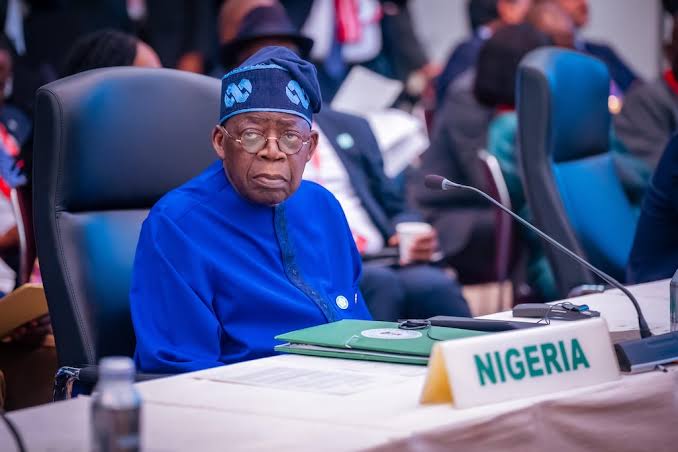
The Presidency has rejected an assessment attributed to The Economist regarding President Bola Ahmed Tinubu’s popularity and political standing in Nigeria, accusing the international publication of presenting a distorted picture of the country.
Special Adviser to the President on Media and Public Communications, Sunday Dare, described the publication’s position as “intellectual fraud”, while defending the economic reforms introduced by the Tinubu administration since May 2023.
In a statement titled “Beyond the Economist Condescension: Nigeria’s Re-engineering Under Tinubu is Unstoppable,” Dare accused foreign observers of relying on what he described as superficial assessments of Nigeria’s complex political and economic realities.
The Presidency particularly rejected what it characterised as the narrative that Nigerians broadly “hate” Tinubu.
Dare argued that such a conclusion failed to account for what he described as the scale of the reforms undertaken by the administration and the difficult economic conditions inherited by the government.
He said the government’s policies should instead be assessed against what he described as a longer-term process of restructuring the Nigerian economy.
The Presidency maintained that the administration’s reforms were aimed at correcting structural weaknesses and repositioning the economy for sustainable growth.
The response comes amid an increasingly contested political narrative ahead of the 2027 presidential election, with the government highlighting economic indicators and reforms while opposition groups and critics continue to focus on the cost-of-living pressures facing households.
The disagreement also reflects a wider debate over how Nigeria’s economic performance should be measured — whether through macroeconomic indicators and government reforms or through the day-to-day experiences of citizens dealing with food, transport, energy and other costs.
Dare’s intervention makes clear that the Presidency intends to vigorously challenge negative assessments of the administration’s performance, particularly as the 2027 political contest approaches.
The Economist’s assessment and the Presidency’s response therefore represent competing interpretations of the same political and economic landscape, rather than an independently established measure of public sentiment.