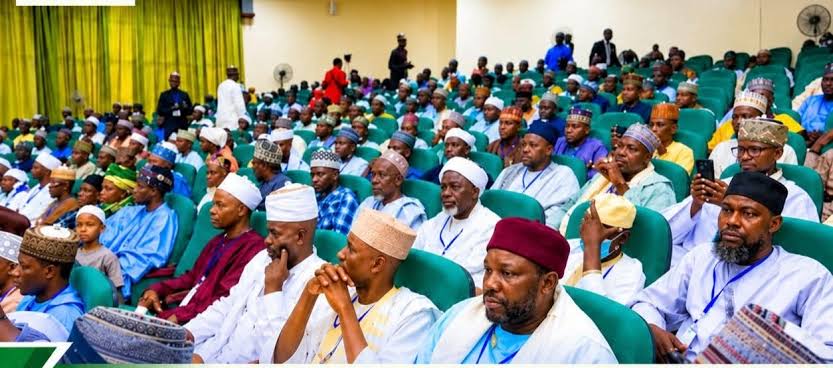
More than 1,000 Islamic clerics have called on President Bola Ahmed Tinubu to abandon his bid for a second term in 2027, citing economic hardship, insecurity and the continued migration of skilled Nigerians.
The call was contained in a communique issued at the end of a national conference titled “An Assessment of the State of the Nation under President Tinubu and the 2027 General Elections,” held in Kano on Sunday.
The clerics, operating under the umbrella of Ko Da Naka — an organisation focused on good governance and community development — in collaboration with the AFAQ Educational Foundation, expressed dissatisfaction with the direction of the Tinubu administration.
They specifically criticised the removal of the petrol subsidy, changes to the naira exchange-rate regime, increases in electricity tariffs and tax reforms, arguing that the measures had increased the pressure on ordinary Nigerians.
According to the communique, the participants argued that government revenue had been prioritised at a time when Nigerians were confronting rising living costs, unemployment and declining purchasing power.
The clerics therefore called for a review of policies they described as harmful and urged the administration to provide more immediate relief to citizens.
They also raised concerns over insecurity, citing killings, kidnappings, banditry and terrorism in different parts of the country.
The conference specifically called for stronger government action against insecurity in the North-West and other affected regions, while urging religious scholars to continue speaking truth to power irrespective of political affiliation, ethnicity or religion.
The clerics further linked Nigeria’s economic difficulties to the continued departure of professionals, including doctors, teachers and engineers.
They called for improved salaries, working conditions and professional development opportunities to discourage skilled Nigerians from leaving the country and to encourage those already abroad to return.
On the 2027 election, the group argued that Nigerians should assess candidates on the basis of competence, integrity, experience and policy proposals rather than political party, ethnic or regional affiliation.
They ultimately urged Tinubu not to seek re-election if his administration failed to address the concerns raised at the conference.
The position represents the views of the participants at the Kano gathering and does not, by itself, establish a broader consensus among Nigeria’s Islamic clerical community.
With the 2027 presidential election scheduled for January 16, 2027, political pressure and competing assessments of the Tinubu administration are expected to intensify as parties and political groups mobilise ahead of the poll.