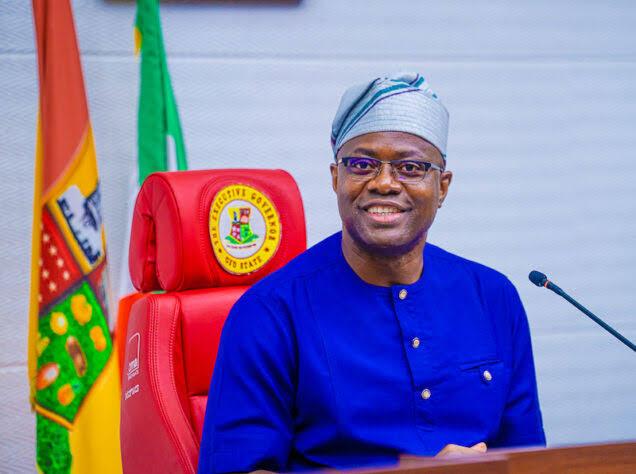
The Makinde-Daura Presidential Campaign Organisation (MDPCO) has expressed confidence that its candidate, Oyo State Governor Seyi Makinde, can defeat President Bola Tinubu in the states identified by the ruling party as key battlegrounds for the 2027 presidential election.
The organisation also predicted that Makinde would defeat Tinubu in other parts of the country, including Rivers State and the Federal Capital Territory (FCT).
The campaign organisation made its position known in a statement issued in Abuja on Saturday through its Director of Strategic Communications, Richard Ihediwa.
It challenged Tinubu to travel by road to Plateau, Kaduna, Kano and other states to assess the condition of federal highways, infrastructure and the hardship facing residents.
According to the organisation, deteriorating road conditions and wider infrastructure challenges reflect shortcomings in the Federal Government’s performance and could influence voters’ decisions in 2027.
The MDPCO maintained that its candidate would present a credible alternative to the incumbent President and argued that public dissatisfaction with the administration could strengthen the opposition’s prospects.
“We are confident that Engr. Seyi Makinde will defeat President Bola Tinubu in the 12 battleground states identified by the President, as well as in other states across the federation, in the January 2027 presidential election,” the organisation said.
The statement represents the campaign organisation’s projection and does not establish how voters in the identified states intend to vote.
Infrastructure and Cost of Living Become Campaign Issues
The challenge issued to Tinubu places infrastructure and economic hardship at the centre of the emerging political contest.
Federal highways are important to the movement of people and goods, connecting communities, supporting commercial activity and linking agricultural producers with markets. Poor road conditions can increase transport costs, damage vehicles and make journeys more difficult for commuters.
The condition of public infrastructure is therefore likely to feature prominently in debates about government performance as the 2027 election approaches.
The campaign organisation’s criticism also reflects wider political disagreements over the administration’s economic policies and their effects on households and businesses.
However, assessing the government’s performance requires consideration of specific road projects, maintenance responsibilities, funding, construction progress and independently verified conditions across different locations.
A Tougher Electoral Contest Ahead
The APC has identified 12 states in which Tinubu is expected to campaign personally, signalling the importance the ruling party attaches to those areas.
The MDPCO’s response suggests that opposition groups intend to challenge the President’s standing in those states rather than concede them to the incumbent.
Nevertheless, campaign predictions are not substitutes for evidence of voter preferences. Actual electoral outcomes will depend on candidates’ popularity, party organisation, campaign messages, voter participation and the credibility of the electoral process.
For Makinde’s campaign, the challenge will be to turn its confidence into a nationwide political structure and persuade voters that it offers practical solutions to infrastructure deficits, economic hardship and other national concerns.
For Tinubu and the APC, the contest will involve defending the administration’s record while convincing voters that its policies can deliver further improvements.
As the campaign period develops, competing claims of victory are likely to intensify, making verifiable performance records and detailed policy proposals increasingly important to the national debate.