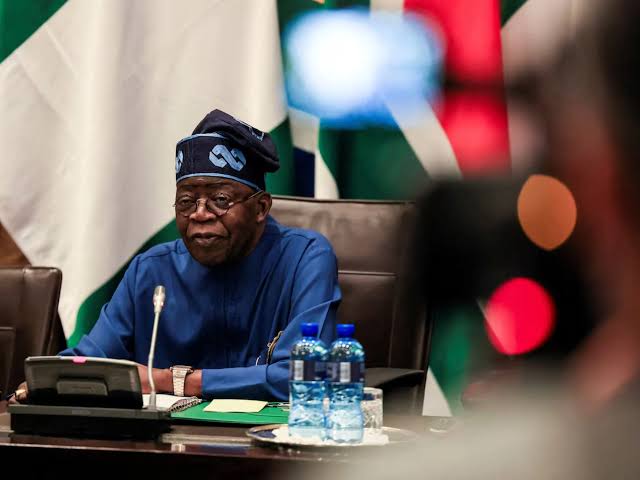
President Bola Ahmed Tinubu has defended his administration’s economic reform programme, saying the government is working to overcome Nigeria’s long-standing structural challenges, attract investment, create jobs and deliver shared prosperity.
Tinubu spoke while addressing the 32nd Nigerian Economic Summit in Abuja, where he outlined his administration’s economic priorities and called for sustained efforts to unlock Nigeria’s human and natural resources.
The President said his government had embarked on what he described as a difficult economic reset to address longstanding obstacles to growth and create a more favourable environment for investment.
“I know what I came into office to do,” Tinubu said, reiterating his administration’s determination to pursue reforms aimed at strengthening the economy and expanding opportunities for Nigerians.
According to the President, the government’s economic agenda is designed to benefit young jobseekers, farmers, manufacturers, entrepreneurs and innovators by improving the conditions necessary for businesses to grow and generate employment.
He argued that sustainable economic growth requires more than short-term interventions, stressing the importance of economic stability, predictable policies and investment in productive sectors.
Tinubu also maintained that Nigeria must move beyond relying on the size of its natural resources and focus on developing the infrastructure, institutions and industrial capacity required to translate those resources into lasting prosperity.
Tinubu Highlights Economic Indicators
The President cited economic indicators that he said demonstrated progress under his administration’s reform programme.
According to figures he presented, Nigeria’s inflation-adjusted gross domestic product grew by 3.89 per cent in the first quarter of 2026, compared with 3.13 per cent in the corresponding period of 2025.
He also highlighted developments in manufacturing, the oil sector and capital importation as indicators of economic activity and investor interest.
Tinubu argued that these developments reflected improvements in the country’s economic foundations and reinforced the need to sustain the reform programme.
However, positive economic indicators do not automatically translate into improved living conditions for every household. The cost of food, transportation, energy and other essential goods remains central to public assessments of the economy.
The removal of the petrol subsidy and changes in foreign exchange policy have been among the administration’s most consequential decisions. Although the government has defended the reforms as necessary to improve public finances and address structural weaknesses, they have also contributed to higher living costs and widespread public concern.
Jobs, Electricity and Agriculture
Tinubu said his administration intended to strengthen the link between infrastructure spending and productive economic activity.
He argued that investments in roads, electricity and other public infrastructure should be evaluated by their capacity to support businesses, improve productivity and generate employment.
On education, the President emphasised the need for improved skills and productivity, particularly as Nigeria seeks to equip young people for changing labour-market demands.
He also highlighted agricultural development, including irrigation, mechanisation, financing and improved connections between farms, storage facilities, processing centres and markets.
The administration, he said, was also pursuing reforms intended to encourage domestic processing of solid minerals, strengthen industrial competitiveness and improve the investment climate.
Tinubu called for a more predictable business environment, saying regulatory improvements and access to finance would be important in attracting capital, technology and expertise.
He further stressed the need to improve the quality of employment, arguing that the creation of jobs alone would not be sufficient if workers lacked the productivity and opportunities required to improve their livelihoods.
Economic Debate Ahead of 2027
The President’s remarks come amid an intensifying political debate over the impact of his economic policies ahead of the 2027 general election.
While the administration maintains that its reforms are laying the foundation for long-term growth, opposition figures have questioned whether the measures have delivered sufficient relief to households facing economic hardship.
The debate increasingly centres on how economic progress should be measured: through indicators such as output, investment and public finances, or through their effects on household income, purchasing power, employment and access to essential services.
Tinubu maintained that his administration was committed to addressing the country’s structural problems and creating opportunities for Nigerians.
The challenge for the government will be to ensure that the gains it cites are reflected in tangible improvements in living standards and economic security across the country.