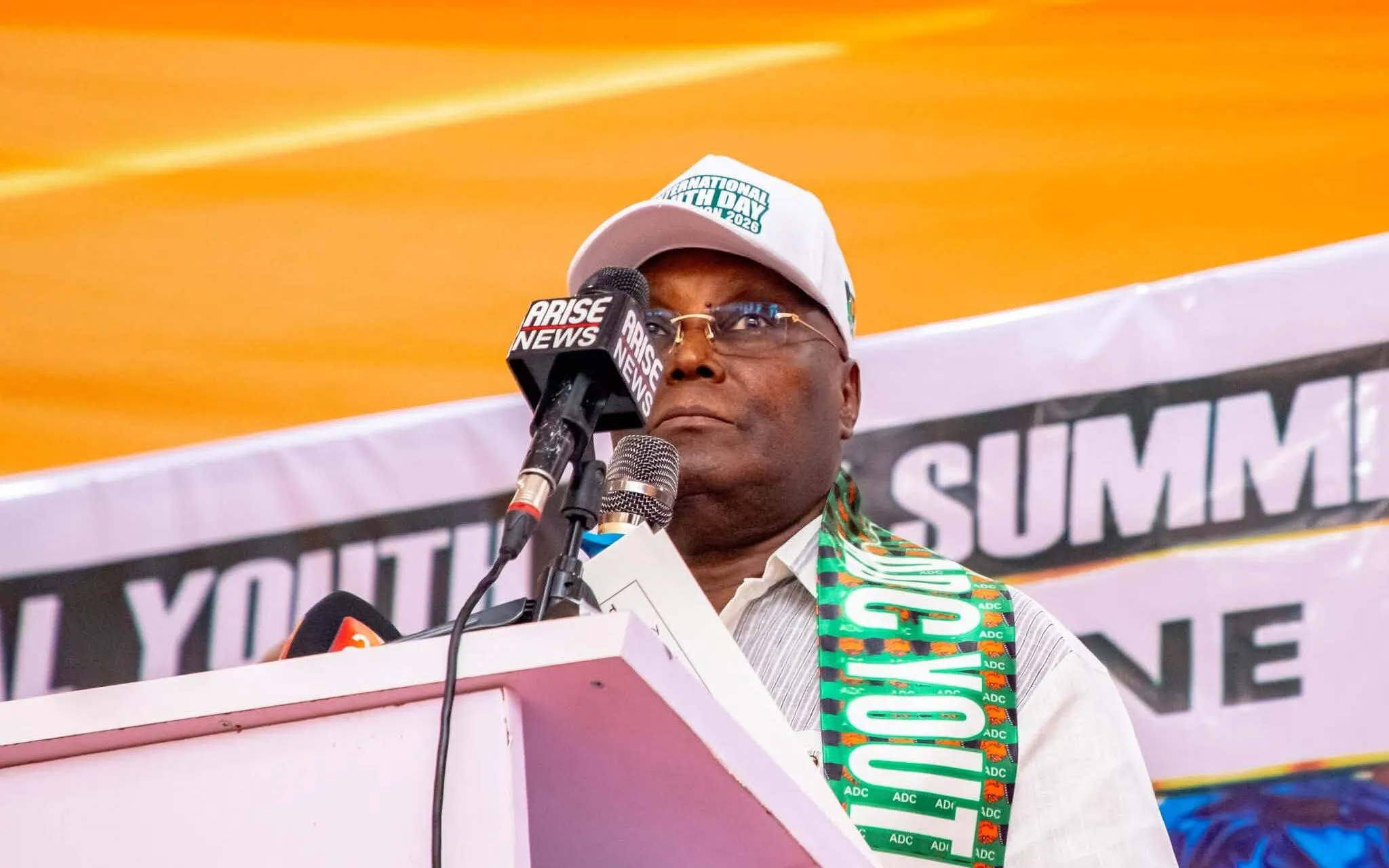
Former Vice-President Atiku Abubakar has criticised Vice-President Kashim Shettima over remarks concerning his educational background, arguing that the Federal Government should focus on Nigeria’s economic difficulties rather than personal exchanges with opposition politicians.
Atiku’s response followed comments made by Shettima at the 32nd Nigerian Economic Summit in Abuja, where the Vice-President discussed petrol prices and defended President Bola Ahmed Tinubu’s economic policies.
The African Democratic Congress (ADC) presidential candidate responded on Monday through Phrank Shaibu, Director of Strategic Communication of the party’s Presidential Campaign Council.
According to the statement, Atiku argued that the summit provided an opportunity for the Vice-President to explain the government’s response to the difficulties Nigerians face in paying for fuel, transportation and food.
“At the 32nd Nigerian Economic Summit in Abuja today, Vice-President Kashim Shettima had a chance to explain why Nigerians are struggling to afford fuel, transport and food. Instead, he made remarks about Atiku Abubakar attending the Kano School of Hygiene,” the statement said.
Atiku defended his educational journey, maintaining that his qualifications and career should not be used to distract from substantive discussions about governance and economic policy.
He argued that his experience reflected a path followed by many Nigerians who pursued further training and built their careers through work.
“What, exactly, is questionable about Atiku’s education? He completed secondary school, pursued further training and built a life through work. Millions of Nigerians have travelled the same road,” the statement added.
Atiku Raises Questions About Tinubu’s Records
The former Vice-President also called attention to questions surrounding President Tinubu’s educational records, referencing a document in the President’s Chicago State University records that reportedly listed him as having graduated from Government College Lagos in 1970.
Atiku’s camp argued that the reported date was inconsistent with the school’s establishment in 1974 and called for greater attention to questions surrounding the President’s records.
The matter has featured in previous political and legal disputes concerning Tinubu’s educational history. However, claims about academic records require careful examination of the underlying documents and relevant institutional explanations.
Atiku’s latest response places the issue within the wider political contest between the ruling All Progressives Congress (APC) and opposition parties as political activities intensify ahead of the 2027 presidential election.
Economic Issues Remain Central to the Debate
Shettima’s appearance at the economic summit focused partly on defending the administration’s decision to remove the petrol subsidy and comparing fuel prices in Nigeria with those in neighbouring countries.
The Vice-President argued that difficult economic decisions were necessary to address structural problems and prevent the costs of reform from increasing further.
However, critics of the administration have continued to question whether the benefits of its policies have reached households struggling with higher prices and declining purchasing power.
Atiku’s response reflects the opposition’s argument that the government should be judged primarily by its handling of economic conditions and the quality of life of ordinary citizens.
The exchange also illustrates how questions about political leaders’ educational backgrounds and personal records can become part of broader electoral disputes.
As the 2027 election approaches, the competing parties are likely to face continued scrutiny over their candidates’ records, policy proposals and ability to address Nigeria’s economic challenges.