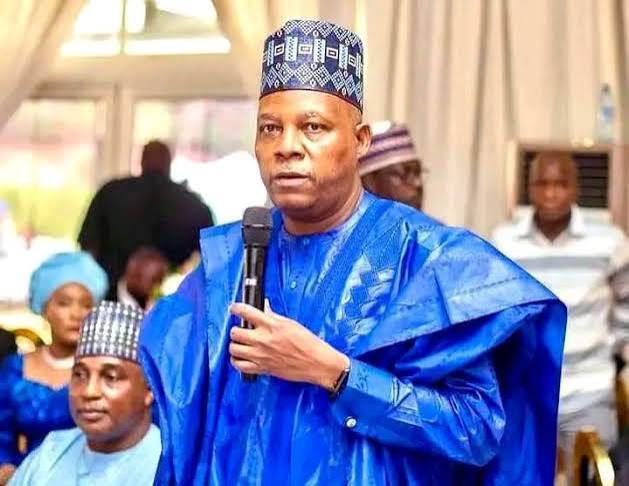
Vice-President Kashim Shettima has criticised Peter Obi, the presidential candidate of the Nigeria Democratic Congress (NDC), arguing that the former Anambra State governor has little to offer Nigeria beyond what he described as dubious statistics.
Shettima made the remarks on Monday, October 26, 2026, while addressing the 32nd Nigerian Economic Summit in Abuja, where he defended President Bola Ahmed Tinubu’s economic reforms and called on members of Nigeria’s business community to support the administration’s policy direction.
“I respect Peter Obi for having the courage to say that he’s not going to restore the fuel subsidy,” Shettima said. “But beyond spouting some dubious statistics, Mr Obi has absolutely nothing to offer.”
The Vice-President’s comments added to the growing political debate over the management of Nigeria’s economy, particularly the removal of the petrol subsidy, rising living costs and competing proposals for addressing the country’s economic difficulties.
Shettima also compared petrol prices in Nigeria with those in neighbouring countries, including Niger Republic, Benin Republic and Cameroon, arguing that the figures illustrated the consequences of the country’s previous fuel pricing arrangements.
According to him, petrol prices in neighbouring countries were higher than those in Nigeria, although the significance of such comparisons depends on factors such as exchange rates, taxation, transportation costs and household purchasing power.
The Vice-President argued that the removal of the petrol subsidy was necessary to address structural problems in public finances and prevent the continued diversion of government resources into a system he said had benefited particular interests.
President Tinubu announced the removal of the petrol subsidy when he assumed office in May 2023. The decision significantly increased fuel and transportation costs, contributing to the pressure on household budgets and prompting sustained criticism from opposition politicians and labour groups.
While the Federal Government has defended the policy as necessary for economic stability, critics have questioned its implementation and called for more effective measures to protect low-income households from its consequences.
Obi has previously argued that the subsidy should have been removed through a better-planned process accompanied by measures to cushion the impact on Nigerians. His wider economic arguments have frequently drawn on public expenditure figures, comparisons with other countries and calls for greater accountability in the management of national resources.
At the summit, Shettima maintained that delaying difficult economic decisions would have increased their eventual cost, urging business leaders to support policies intended to attract investment, expand businesses and generate employment.
He also acknowledged that economic growth must translate into better livelihoods, arguing that the government’s responsibility extends beyond creating jobs to improving their quality and productivity.
The latest exchange underscores the growing contest between the ruling APC and opposition parties over the direction of Nigeria’s economy ahead of the 2027 presidential election.
Although Shettima dismissed Obi’s use of statistics, he did not identify specific figures in the reported remarks that he considered inaccurate. The disagreement therefore highlights the importance of examining the underlying data, the assumptions behind economic comparisons and the practical consequences of competing policy proposals.