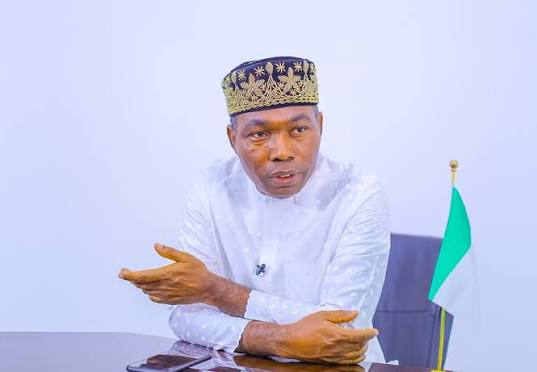
Social Democratic Party presidential candidate Adewole Adebayo has said his ambition in the 2027 presidential election is to govern Nigeria through service and accountability rather than exercise power over citizens.
Adebayo made the statement while outlining his political philosophy and his proposed approach to governance ahead of the 2027 election.
The SDP candidate has positioned his campaign as an alternative to what he describes as the recycling of political leaders who have occupied public offices without resolving the country’s longstanding social and economic challenges.
A different model of governance
Adebayo’s campaign has repeatedly emphasised measurable outcomes, institutional accountability and a shift away from governance centred primarily on political announcements.
His published policy framework proposes a four-year programme focused on security, food, water, energy, healthcare, education, housing, employment, infrastructure and digital access.
The framework also proposes measurable targets and regular monitoring of government performance rather than judging success merely by whether projects are announced or launched.
According to the candidate’s policy platform, government programmes should ultimately be assessed by improvements in citizens’ living conditions.
Targeting ordinary Nigerians
Adebayo has sought to make the economic and social difficulties experienced by ordinary Nigerians a central feature of his campaign.
His argument is that political office should be treated as a public-service responsibility rather than an instrument for personal or elite accumulation.
The SDP candidate will, however, face a significant challenge in translating that message into nationwide electoral support.
Nigeria’s 2027 presidential contest is expected to feature major political figures with considerably larger party structures and established national networks.
The 2027 contest
Adebayo’s candidacy adds another voice to an increasingly crowded political field.
His campaign will have to demonstrate not only the appeal of his policy proposals but also the organisational capacity required to compete effectively across Nigeria’s 36 states and the Federal Capital Territory.
With voters increasingly focused on security, inflation, employment, infrastructure and public accountability, the effectiveness of competing candidates’ policy messages could become an important factor in the election.