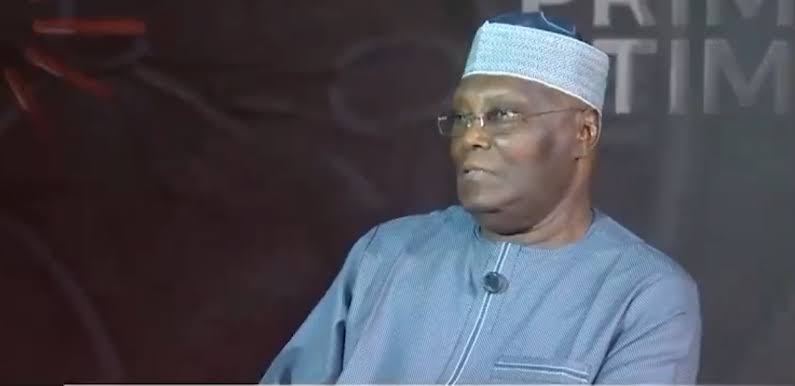
Former Vice President Atiku Abubakar has challenged President Bola Ahmed Tinubu’s administration to account for the savings generated by the removal of Nigeria’s petrol subsidy, arguing that the ongoing crisis in the university system raises serious questions about the government’s use of those resources.
Atiku, the African Democratic Congress presidential candidate for the 2027 election, made the demand amid renewed concerns over unpaid university lecturers’ entitlements and the threat of industrial action by the Academic Staff Union of Universities.
In a statement issued through his Senior Special Assistant on Public Communication, Phrank Shaibu, Atiku argued that Nigerians had already paid a heavy economic price following the removal of the subsidy.
He said the policy was presented as a means of freeing resources for education, healthcare, infrastructure and social welfare.
‘Where is the money?’
Atiku’s central question was how the savings associated with subsidy removal have been deployed.
He argued that Nigerians had experienced higher fuel prices, transportation costs, food prices, energy bills and education expenses since the subsidy was removed.
At the same time, he said public universities continued to face financial and infrastructural pressures while lecturers were raising concerns over unpaid entitlements and unresolved agreements.
“Where is the money?” became the central refrain of his criticism.
ASUU crisis becomes political issue
The latest confrontation comes as ASUU threatens renewed industrial action over unresolved issues involving salaries and agreements with the Federal Government.
Atiku argued that the possibility of another university shutdown exposes what he described as a contradiction in the government’s justification for subsidy removal.
His argument is that if subsidy savings were intended to strengthen essential public services, Nigerians should be able to identify measurable improvements in education.
The former vice president also questioned the effectiveness of increased allocations to state governments if public education remains under pressure.
Government’s broader reform argument
The Tinubu administration has defended the subsidy removal as a necessary economic reform, arguing that the policy eliminated a costly distortion and created fiscal space for governments.
The government has also pointed to increased revenues and allocations to states since the reform.
The debate, however, is increasingly shifting toward how those additional resources are being spent and whether ordinary Nigerians are receiving tangible benefits.
Education has become a particularly sensitive measure because of its direct impact on young Nigerians.
Education under pressure
Atiku argued that Nigeria’s growing population requires major investment in classrooms, laboratories, hostels, teaching capacity and university admission spaces.
He also criticised the government’s student-loan policy, arguing that families struggling with higher living costs should not have to rely on loans simply to cope with rising education expenses.
The government, however, has presented NELFUND as part of its effort to expand access to tertiary education and reduce financial barriers for students.
The 2027 dimension
The dispute is likely to become an important component of the 2027 presidential campaign.
Fuel prices, education funding and the cost of living are issues that directly affect millions of Nigerian households.
For Atiku, the ASUU crisis provides an opportunity to question the government’s economic priorities and demand greater transparency over the proceeds of subsidy removal.
For the Tinubu administration, the challenge is to demonstrate that the difficult reforms introduced since 2023 are producing measurable improvements in public services and economic stability.
The controversy therefore goes beyond ASUU.
It has become part of the larger political argument over whether Nigerians have received sufficient value in return for the economic sacrifices imposed by subsidy removal.