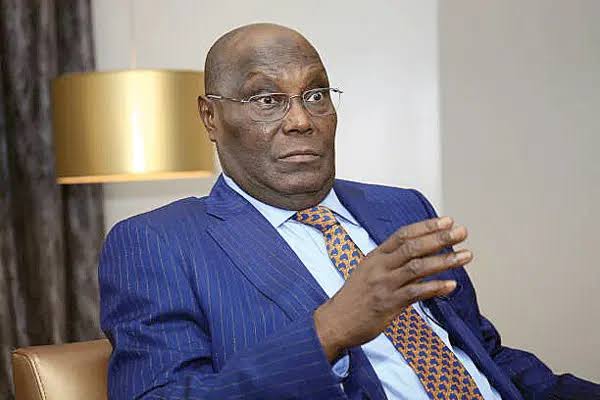

Former Vice President Atiku Abubakar has criticised President Bola Tinubu’s response to Nigeria’s cost-of-living pressures, arguing that the government must do more to protect households struggling with high food and transportation costs.
Atiku, the presidential candidate of the African Democratic Congress (ADC), made the comments through Phrank Shaibu, Director of Strategic Communication of the ADC Presidential Campaign Council, on Friday, October 2.
He argued that Tinubu’s Independence Day address did not adequately reflect the economic difficulties experienced by ordinary Nigerians, particularly the rising cost of fuel and basic necessities.
Atiku points to Germany’s fuel tax measures
In support of his argument, Atiku cited a reported German government measure reducing taxes on petrol and diesel by €0.17 per litre for the October-to-December period, at an estimated fiscal cost of €2.5 billion.
He said the measure demonstrated how a government could intervene to reduce pressure on households facing high energy costs.
The comparison forms part of Atiku’s criticism of Nigeria’s current approach to fuel pricing and the wider economic impact of the removal of petrol subsidies.
However, the fiscal and market conditions in Germany differ from those in Nigeria. The implications of a fuel-tax reduction depend on how the measure is structured, its cost to government, the market price of fuel and whether the savings are passed on to consumers.
The German example therefore provides a point of comparison in the policy debate, but does not by itself establish that an identical intervention would produce the same results in Nigeria.
Household costs at the centre of the debate
Atiku said families were being squeezed by the combined cost of transportation, food and other essential items.
Fuel prices affect more than motorists. They can influence public transport fares, the movement of agricultural produce, distribution costs and the expenses faced by businesses that depend on petrol or diesel.
The ADC politician’s criticism reflects an argument that economic policy should be assessed not only by its stated long-term objectives but also by its effects on household purchasing power.
The Tinubu administration, meanwhile, has defended the removal of the petrol subsidy as part of its broader economic reform programme and has ruled out restoring the former subsidy regime.
Competing approaches to economic relief
The debate centres on how governments should balance fiscal sustainability with immediate support for citizens.
Possible interventions can include targeted assistance, transport subsidies, tax measures, social protection programmes and investment in infrastructure. Each approach carries different funding requirements and potential effects on prices, public revenue and household welfare.
Atiku’s statement presents his criticism of the current administration and points to Germany’s reported tax measure as an alternative policy reference. The comparative merits of such options depend on their design, financing and measurable results.