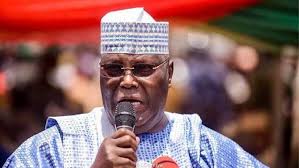
Former Vice-President Atiku Abubakar has called on the Independent National Electoral Commission to exclude university lecturers who have publicly declared support for President Bola Ahmed Tinubu from sensitive roles in the 2027 general elections.
Atiku’s campaign argued that academics who openly identify with political candidates could face questions over their ability to perform electoral duties impartially.
The warning was issued through Atiku’s Senior Special Assistant on Public Communication, Phrank Shaibu, who said lecturers who publicly endorse politicians should not be deployed as returning officers or assigned other sensitive electoral responsibilities.
“You cannot wear a party jersey today and expect Nigerians to accept you as an impartial referee on election day,” Shaibu said in a statement on Monday.
ADC raises concern over electoral neutrality
The demand comes as political parties and presidential candidates begin to focus increasingly on the conduct and credibility of the 2027 election.
Atiku, the presidential candidate of the African Democratic Congress, has repeatedly raised concerns about the neutrality of electoral institutions and the need for safeguards ahead of the poll.
His latest position places the spotlight on the role of university academics in Nigeria’s electoral process.
Lecturers have historically been recruited by INEC for various election duties, including returning and collation responsibilities, because of their professional standing and perceived independence.
Atiku’s camp now argues that such credibility could be compromised where an academic has publicly taken a partisan position.
Demand for stronger safeguards
Shaibu urged INEC to identify lecturers who have openly declared allegiance to political parties or candidates and prevent them from participating in sensitive electoral assignments.
The ADC said the measure would help strengthen public confidence in the electoral process and reduce disputes over the impartiality of election officials.
The party’s position reflects a broader concern likely to dominate the 2027 political season: whether electoral officials can maintain neutrality in an environment of intense political competition.
However, public political expression by an academic does not automatically establish that the person is legally disqualified from serving in an election role.
Any decision by INEC to exclude individuals would therefore have to be assessed against the commission’s legal framework, recruitment procedures and applicable electoral regulations.
Election credibility in focus
The debate comes as political parties increasingly prepare for the 2027 election and opposition groups scrutinise INEC’s conduct ahead of the poll.
The ADC has previously accused the electoral commission of favouring the governing political structure, allegations INEC and other authorities have disputed.
For Atiku’s camp, the central issue is trust.
The former vice-president’s supporters argue that election officials must not only be impartial but must also be perceived by voters and competing parties as impartial.
That distinction is important in an election where close contests could produce disputes over results and electoral procedures.
For INEC, the challenge will be to maintain confidence among competing parties while applying its rules consistently to all election personnel.
The commission has yet to indicate whether it will adopt Atiku’s proposal or introduce additional restrictions on the deployment of politically active academics.
With the 2027 election approaching, questions about the neutrality of election officials are likely to become an increasingly prominent part of Nigeria’s political debate.