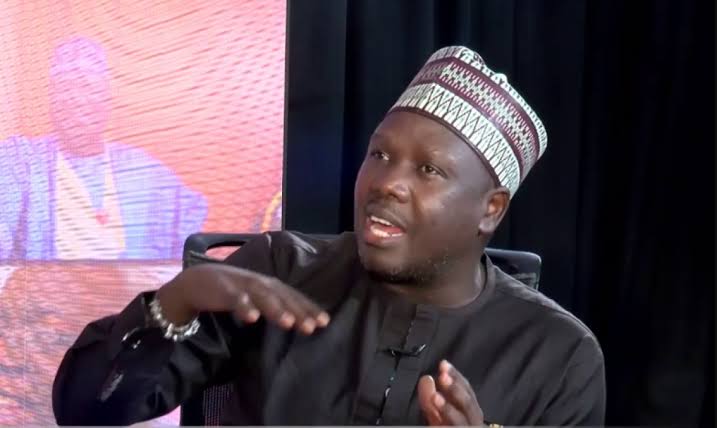
Special Adviser to President Bola Ahmed Tinubu on Policy Communication, Daniel Bwala, has acknowledged that the Federal Government’s economic reforms contributed to more Nigerians falling into poverty, while insisting that the administration has recorded significant progress since the reforms began.
Bwala made the admission during an appearance on Channels Television’s Politics Today on Wednesday while defending the economic policies implemented by the Tinubu administration since 2023.
The presidential aide said the government was aware that the reforms would impose hardship in the short term but argued that the economic restructuring was necessary to correct longstanding distortions.
“More people went down to poverty, acknowledged, but since when the reform started to today, we have made marked progress,” Bwala said.
His comments represent one of the more direct acknowledgements from a senior presidential official of the social cost associated with the administration’s reform programme.
Tinubu’s government removed the petrol subsidy shortly after assuming office in May 2023 and subsequently pursued a unification of the foreign exchange market.
The measures significantly altered the cost structure facing households and businesses, contributing to higher transportation, logistics, food and production costs.
The government has consistently defended the policies as necessary measures to address structural weaknesses in public finances, improve revenue, attract investment and create the foundation for longer-term economic growth.
Bwala acknowledged that the immediate consequences were painful, particularly for vulnerable Nigerians, but maintained that the country had made progress since the reforms were introduced.
He argued that the hardship should be viewed alongside what he described as improvements recorded in the economy since the government began implementing its reform programme.
The admission nevertheless places the issue of poverty at the centre of the administration’s economic narrative as the government seeks to convince Nigerians that the difficult adjustment period is giving way to recovery.
President Tinubu has repeatedly argued that the reforms are beginning to produce results, pointing to developments in inflation, foreign-exchange stability, government revenue and external reserves as evidence of improving economic conditions.
Critics of the administration, however, continue to argue that macroeconomic indicators must ultimately translate into lower living costs, better purchasing power and improved living standards before Nigerians can fully feel the benefits of the reforms.
Bwala’s comments therefore capture the central tension surrounding Tinubu’s economic programme: whether the short-term pain inflicted by the reforms will eventually be matched by sufficient gains in jobs, incomes, investment and household welfare.
The presidential aide also expressed confidence in Tinubu’s prospects for the 2027 presidential election, predicting that the President would win by a wider margin than he did in 2023.
With the next general election approaching, the economic record of the Tinubu administration is likely to remain one of the defining issues in the political contest, particularly as opposition parties seek to turn public frustration over the cost of living into an electoral argument.