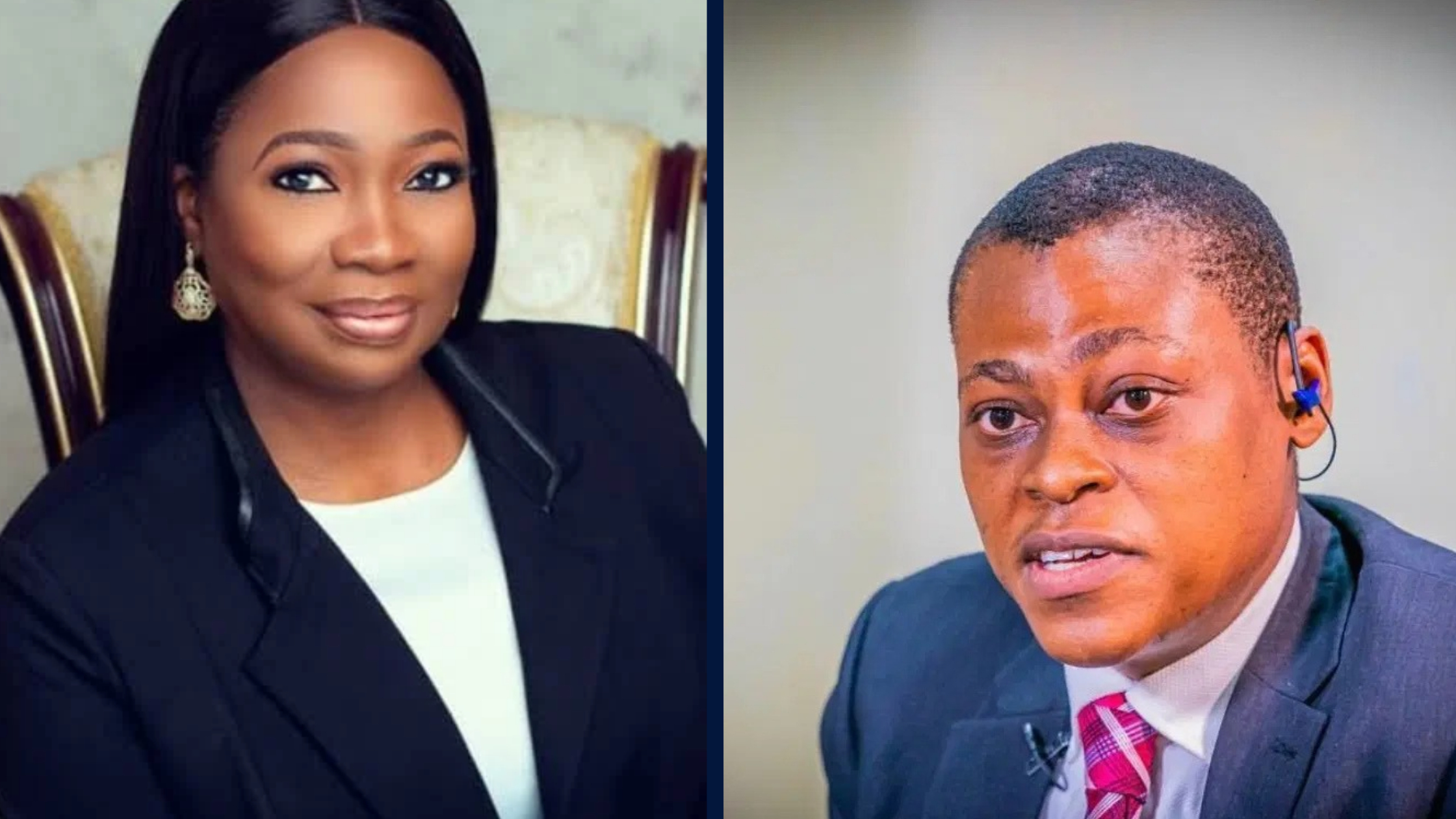
The chairperson of the Nigerians in Diaspora Commission (NiDCOM), Abike Dabiri-Erewa, and ARISE Television presenter Rufai Oseni have exchanged sharp criticism over journalistic responsibility and a social media post that became the subject of controversy involving the Igbo ethnic group.
The disagreement became public during a panel discussion in Lagos marking Kike Abati’s 20th anniversary in the media industry. Dabiri-Erewa accused some journalists of reporting without adequately establishing the facts, singling out Oseni over his interpretation of her reaction to a social media post.
The exchange has renewed debate about the responsibilities of public officials, journalists and social media users when dealing with content that could be interpreted as offensive to an ethnic group.
Dabiri-Erewa disputes interpretation of her reaction
Dabiri-Erewa said the controversy originated from an exchange involving a social media account she identified as belonging to a user named Stephanie.
According to her account, she responded to a post with a smiling emoji. She alleged that Oseni subsequently interpreted the reaction as an endorsement of a description of Igbo people as “monkeys and gorillas”.
She rejected that interpretation, arguing that she had not made the statement attributed to her.
“We have to ensure that you hold people responsible, but you must be responsible yourself. So we will not accept irresponsible journalism,” Dabiri-Erewa said.
She also criticised what she described as declining standards and values in journalism, insisting that journalists must verify information before publishing or amplifying claims.
Oseni maintains his criticism
Oseni responded through posts on X, disputing Dabiri-Erewa’s explanation and arguing that reacting with a laughing emoji to a post denigrating an ethnic group could reasonably be interpreted as an endorsement.
He rejected her criticism of his conduct and challenged her to a public debate over the controversy.
“You are guilty as charged,” Oseni wrote, maintaining that her reaction to the post was the issue in dispute.
The journalist also urged Dabiri-Erewa to focus on the responsibilities of the commission she leads rather than engage in a public dispute with him.
The disagreement has therefore centred not only on the original social media exchange but also on how journalists and public officials should interpret, explain and respond to potentially offensive online content.
Questions of accountability and responsible reporting
The dispute highlights a broader challenge in contemporary journalism: distinguishing between a person’s original statement, their reaction to another person’s post and the interpretation subsequently placed on that reaction.
It also raises questions about how public figures should address claims involving ethnic identity, particularly in a country where sensitive communal issues can generate intense public reactions.
Dabiri-Erewa and Oseni have presented different interpretations of the incident. Their exchange does not, by itself, conclusively establish whether the emoji amounted to an endorsement of the offensive description.
The controversy reinforces the importance of examining the original post and its full context before drawing conclusions about an individual’s intentions.