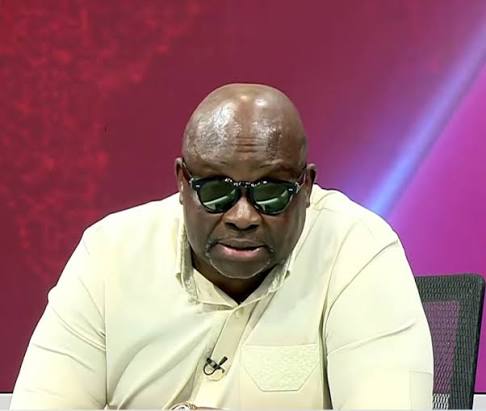
Former Ekiti State Governor Ayodele Fayose has claimed that a Peter Obi-Rabiu Kwankwaso presidential ticket could face difficulties in Kano, arguing that some voters in the state are unhappy with Kwankwaso’s reported decision to accept the vice-presidential position.
Fayose made the claim while discussing the emerging opposition alignment ahead of the 2027 presidential election.
His argument centres on the political calculations surrounding Kwankwaso, a former Kano State governor and the New Nigeria Peoples Party’s presidential candidate in the 2023 election.
Kwankwaso remains one of the most influential political figures in northern Nigeria, particularly in Kano, where his Kwankwasiyya political movement has a substantial following.
The question of whether he can transfer that political influence into a presidential alliance with Obi has become an important part of the opposition’s 2027 calculations.
However, the exact political arrangement described in the supplied claim requires careful context.
INEC-published candidate information reported earlier this month listed Peter Obi as the presidential candidate of the National Democratic Congress, with Kwankwaso as his running mate.
That development represents a major change from 2023, when Obi contested under the Labour Party while Kwankwaso ran separately for the NNPP.
Their separate candidacies contributed to a fragmented opposition vote.
In the 2023 presidential election, Kwankwaso won more than 1.4 million votes nationally, with his strongest support concentrated in Kano and other parts of the North. Obi won more than six million votes nationally and emerged as a major challenger outside the traditional APC-PDP structure.
The potential strength of a combined Obi-Kwankwaso ticket therefore lies partly in the possibility of bringing together two voter blocs that competed separately in 2023.
But Fayose argues that the alliance could also create political complications.
He claimed that some people in Kano are unhappy that Kwankwaso agreed to serve as Obi’s running mate and suggested that this could make it difficult for the ticket to perform as expected in the state.
That claim should be understood as Fayose’s political assessment.
There is evidence that the Obi-Kwankwaso combination has attracted significant political attention in Kano. Reports from earlier this year documented large gatherings around Kwankwaso and discussions about the possibility of the two opposition figures working together.
But online reactions and political gatherings cannot by themselves establish how Kano voters will vote in 2027.
The state remains one of the most electorally important battlegrounds in Nigeria.
Its large voting population and Kwankwaso’s political influence make Kano particularly important to any opposition coalition seeking to challenge the APC.
For the Obi-Kwankwaso ticket, the challenge will therefore be to convert the alliance from a political arrangement into an electoral coalition capable of maintaining support across Kano and expanding into other northern states.
For the APC, the ticket presents both an opportunity and a challenge.
If the alliance fails to consolidate Kwankwaso’s traditional support while retaining Obi’s existing voter base, the ruling party could benefit from another divided opposition vote.
But if the two camps successfully combine their strengths, the political arithmetic of the 2027 contest could change significantly.
Fayose believes the alliance will struggle in Kano.
Whether that prediction reflects the mood of the electorate will ultimately be determined by the campaign and, more importantly, the votes cast in January 2027.