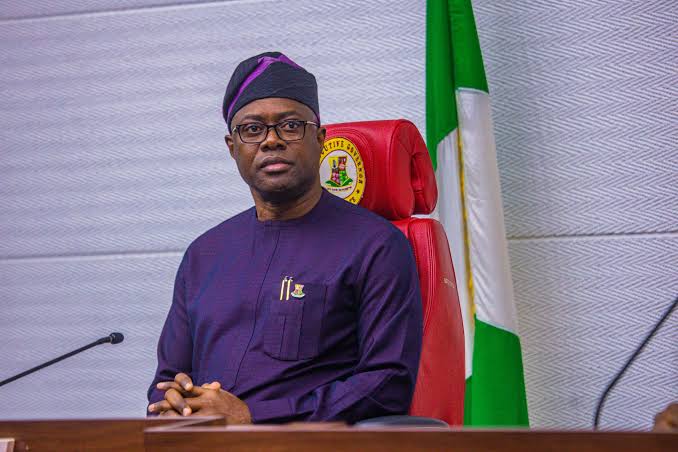
Oyo State Governor and presidential candidate of the Allied Peoples Movement (APM), Seyi Makinde, has criticised President Bola Ahmed Tinubu’s handling of the economy, arguing that improvements in Nigeria’s foreign reserves do not necessarily translate into better living conditions for ordinary citizens.
Makinde made the remarks on Saturday through a video message at the launch of the Makinde and Daura for Better Nigeria (MAD) Resetter Movement in Lagos, where political stakeholders and party supporters gathered ahead of the 2027 general election.
The governor described the emphasis on rising foreign reserves as a political gimmick, insisting that economic performance should be measured by its impact on household welfare, purchasing power and access to basic necessities.
According to Makinde, the government’s presentation of positive financial indicators risks creating an incomplete picture of the country’s economic situation when many Nigerians continue to struggle with the cost of living.
His comments add to the growing political debate over whether the federal government’s economic reforms are delivering sufficient benefits to citizens, particularly amid persistent concerns about food prices, transportation costs and household purchasing power.
Makinde called for a comprehensive reset of Nigeria’s economic, security, educational and political systems, arguing that the country needed a governance framework capable of producing more inclusive and sustainable development.
He also advocated a return to what he described as the principles of federalism and multiparty democracy, suggesting that effective governance requires stronger institutions and policies that respond to the needs of citizens.
The launch of the MAD Resetter Movement attracted APM leaders, party loyalists, stakeholders and candidates preparing for the 2027 elections in Lagos and other parts of the country.
The event provided a platform for Makinde to outline his political vision as he positions himself for the presidential contest under the APM banner.
His criticism comes as the Tinubu administration continues to defend its economic reforms, including the removal of petrol subsidies and changes to the foreign exchange regime, as necessary measures to stabilise public finances and encourage investment.
Supporters of the reforms have pointed to improvements in some macroeconomic indicators, while critics argue that the benefits have yet to translate into adequate relief for many households.
Foreign reserves are an important measure of a country’s external financial position, but they do not independently determine household income, inflation or the affordability of essential goods and services.
Makinde’s remarks therefore reflect a wider argument over how Nigeria’s economic recovery should be assessed and what policies would most effectively improve living standards.
As the 2027 election approaches, economic management is likely to remain a major point of contest between the ruling APC and opposition parties seeking to present alternative approaches to national development.