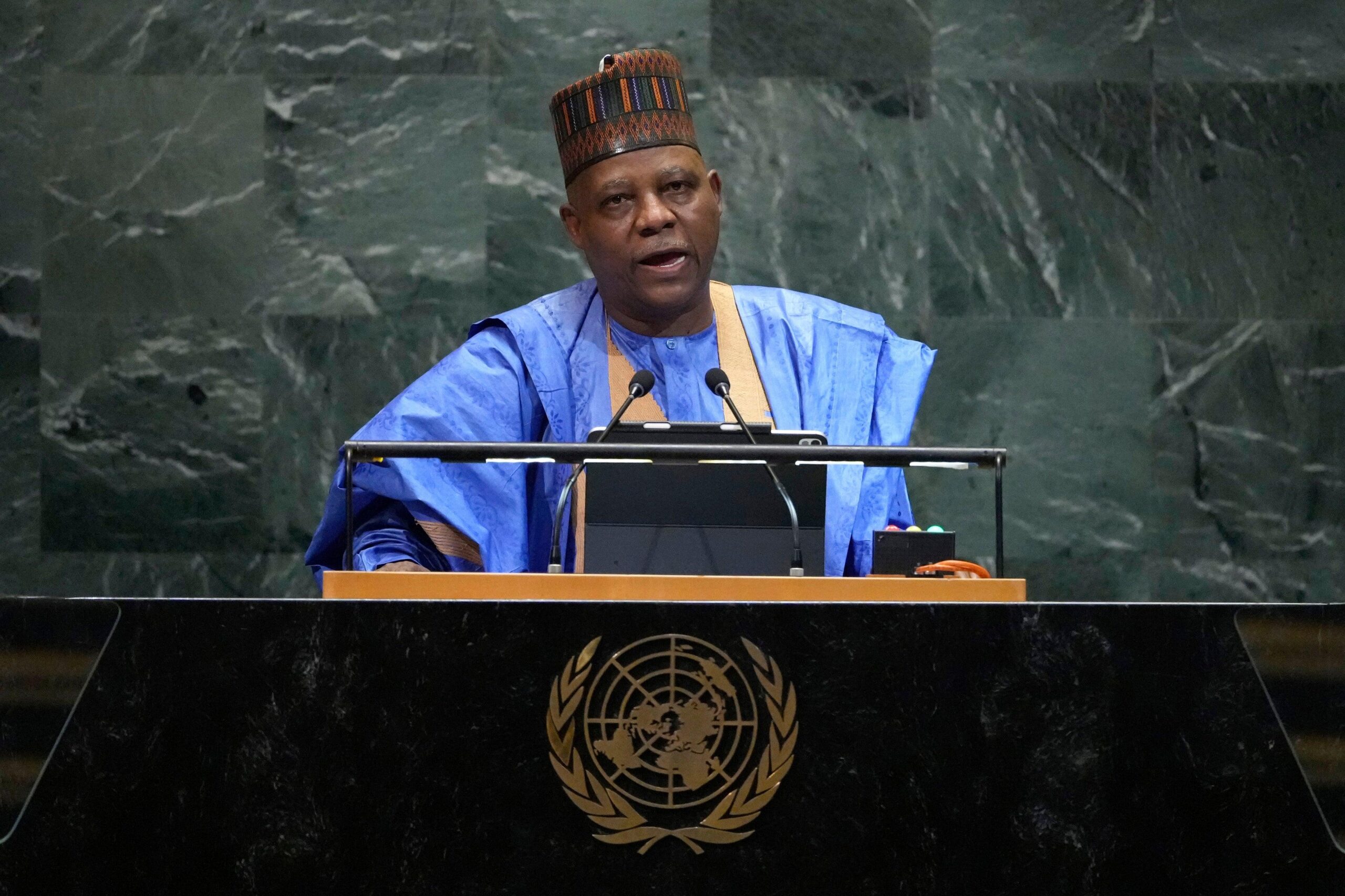
Nigeria has renewed its call for comprehensive reform of the United Nations Security Council, with Vice President Kashim Shettima insisting that Africa must receive permanent representation in the body responsible for addressing major threats to international peace and security.
Shettima made the demand while addressing the 81st Session of the United Nations General Assembly, where he argued that the current structure of the Security Council continues to reflect the geopolitical balance of 1945 rather than the realities of the contemporary international system.
His intervention placed Nigeria’s longstanding demand for greater African representation at the centre of the country’s diplomatic position during the General Assembly.
Nigeria’s Demand for Permanent Representation
Shettima said Nigeria was seeking, in line with the Ezulwini Consensus and the Sirte Declaration, at least two permanent seats for Africa, with all the rights and responsibilities attached to permanent membership.
He also called for five non-permanent seats for the continent.
The demand includes veto rights for the proposed permanent African members for as long as the veto remains part of the Council’s institutional framework.
The Ezulwini Consensus and Sirte Declaration are key African Union positions on reforming the international security architecture and improving the continent’s representation in global decision-making.
‘The World of 2026 Cannot Remain Captive to 1945’
In his address, Shettima argued that the structure of global governance must evolve to reflect the contemporary distribution of political, economic and demographic influence.
“For the world of 2026 cannot remain captive to the distribution of power in 1945,” Shettima said.
The statement reflects Nigeria’s position that Africa should not remain central to discussions about global peace and security while lacking a permanent seat on the Council.
The reform debate has continued for decades, with different countries and regional groupings proposing changes to the Council’s composition, membership and decision-making powers.
Africa’s Representation and Global Security
The Security Council currently has 15 members, including five permanent members with veto power and 10 non-permanent members elected for two-year terms.
African countries have repeatedly called for permanent representation, arguing that the continent’s contribution to international peacekeeping and its exposure to security challenges warrant a stronger role in the Council.
The proposed reform would require broad international agreement and changes to the UN Charter.
Nigeria’s latest intervention underscores the country’s continuing diplomatic effort to position African representation as a central component of any future Security Council reform.