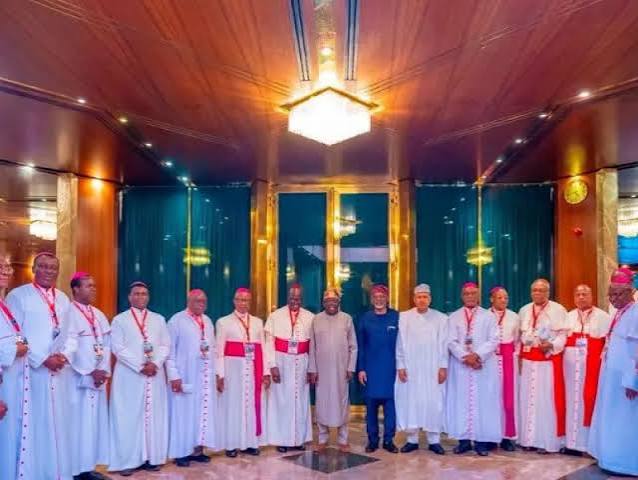
The Northern Christian Association has thrown its weight behind the Catholic Bishops’ Conference of Nigeria following the controversy surrounding the bishops’ recent meeting with President Bola Tinubu.
The group also criticised the Presidency’s Special Adviser on Media and Public Communications, Daniel Bwala, accusing him of attempting to create division within the Christian community.
The association’s position followed a public disagreement over comments made after the Catholic bishops met with Tinubu and raised concerns about the country’s socio-economic and security challenges.
The Northern Christian Association said the bishops were within their rights to raise issues affecting the nation and rejected suggestions that their intervention was limited to Catholic interests.
According to the association, the Catholic bishops spoke on matters affecting Christians generally as well as the wider Nigerian population.
The group warned against what it described as divisive politics and said it would resist any attempt to set one Christian denomination against another.
Group defends bishops
The association’s chairman, Reverend Joseph Hayab, stressed that the organisation represents Christians from different denominations across northern Nigeria.
These include Catholics, Baptists, ECWA, Methodists, Anglicans and Pentecostals.
Hayab argued that the diversity of the association demonstrates that Christians from different traditions can work together on matters of national concern.
The group’s intervention comes amid an increasingly heated debate over the relationship between religious leaders and the Tinubu administration.
Presidency, bishops clash
The controversy was triggered by the response of the Presidency to comments made by Cardinal John Onaiyekan following the bishops’ meeting with Tinubu.
The Presidency criticised the conduct of the Catholic bishops and argued that they were not the sole custodians of the truth concerning the state of the nation.
The Northern Christian Association has now rejected the attempt to portray the bishops’ intervention as divisive, insisting that national issues should be discussed openly.
The dispute has further widened the conversation about the role of Christian leaders in political and national affairs.
With the 2027 elections approaching, the reactions are also likely to attract increased political attention as the government, opposition parties and religious organisations continue to debate issues of governance, insecurity and the economy.