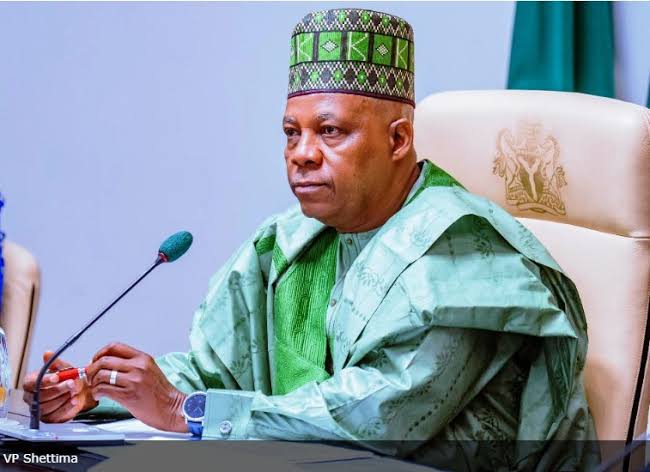
Vice-President Kashim Shettima has urged Nigerians to exercise patience with the administration of President Bola Ahmed Tinubu and recognise its efforts to address the country’s economic challenges.
Shettima made the appeal on Saturday, October 3, 2026, in Lagos after visiting Tinubu, who returned to Nigeria on Thursday following an extended stay in Europe.
The vice-president’s remarks come amid continuing public debate over the impact of the federal government’s economic policies, including the removal of the petrol subsidy, exchange-rate reforms and measures intended to improve government revenue.
According to reports of his comments, Shettima called on Nigerians to show understanding and appreciate what he described as the administration’s efforts to fix the economy.
Government defends its economic direction
Since taking office in May 2023, Tinubu’s administration has pursued major economic changes aimed at restructuring public finances, reforming the foreign-exchange market and reducing the government’s subsidy burden.
The government has argued that these measures are necessary to improve fiscal sustainability and create conditions for longer-term economic growth.
However, the changes have also contributed to significant adjustment pressures for households and businesses, particularly through higher transport and living costs.
The administration’s economic strategy has therefore remained a major subject of public debate, with supporters emphasising the need for structural reforms and critics questioning the pace of implementation and the adequacy of support for vulnerable Nigerians.
Cost-of-living pressures remain central
For many households, the effects of economic reforms are measured through the prices of food, fuel, transportation, rent, healthcare and education.
Businesses have also faced changing operating costs, with the price of energy and the availability of affordable financing influencing production and distribution.
Although the government has introduced and announced various relief and intervention measures, the extent to which these have improved living standards varies across households and regions.
Shettima’s appeal for understanding comes as Nigerians continue to assess whether the government’s policies are translating into better purchasing power, job opportunities and more affordable essential goods.
Economic recovery will be judged by outcomes
Calls for patience are likely to remain part of the government’s defence of its reform agenda. However, public confidence will also depend on measurable improvements in economic conditions.
Relevant indicators include inflation, employment, real wages, household consumption, exchange-rate stability and the cost of essential goods and services.
The vice-president’s statement reflects the administration’s position that its economic efforts deserve recognition. The broader assessment of the reforms will depend on economic data and their effects on ordinary Nigerians over time.