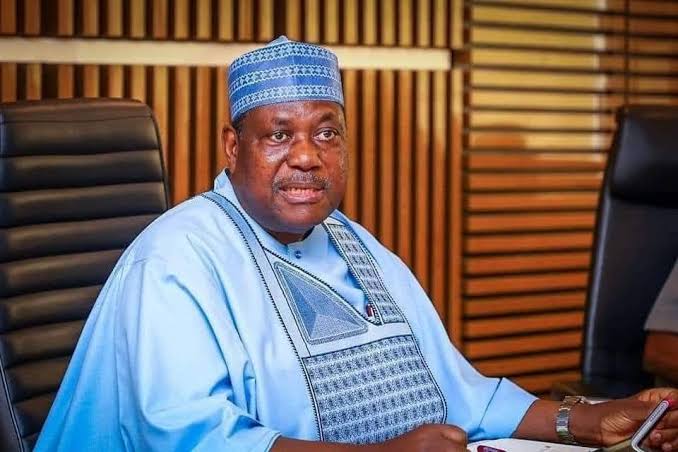
Secretary to the Government of the Federation, Senator George Akume, has urged former Vice-President Atiku Abubakar and other northern political figures to respect Nigeria’s longstanding power-rotation understanding and allow the South to complete an eight-year presidential tenure.
Akume argued that the arrangement, which emerged from political consultations ahead of the return to civilian rule in 1999, remains important for promoting national cohesion, fairness and stability within Nigeria’s democratic system.
The SGF expressed the position on Wednesday in Abuja while receiving a delegation from the Order of the Knights of St Mulumba, Nigeria, according to a statement issued by his office.
His comments come as political parties and potential presidential contenders intensify preparations for the 2027 general elections, with the question of which region should produce the next president becoming an increasingly prominent subject of debate.
Atiku, a former vice-president and the African Democratic Congress (ADC) presidential candidate, is among the major political figures expected to feature prominently in discussions about the next presidential contest.
Akume maintained that the power-rotation understanding should be respected to preserve confidence among Nigeria’s regions and prevent disputes over the distribution of political authority.
He described the arrangement as a fundamental understanding that has helped sustain national cohesion, fairness and democratic development since the return to civilian government.
The debate over power rotation has remained a recurring feature of Nigeria’s politics, particularly in presidential elections where regional representation and political alliances can influence party negotiations and voter mobilisation.
Supporters of rotation argue that it provides a framework for balancing access to the presidency among the country’s major regions. Critics, however, have questioned whether an informal political understanding should take precedence over constitutional eligibility, party processes and the electorate’s choice.
Nigeria’s Constitution does not prescribe a formal North-South rotation of the presidency. The arrangement is a political convention rather than a constitutional requirement.
Akume’s intervention therefore adds to the political argument over whether continuity of the current southern presidency should influence decisions about candidates for 2027.
With the next election approaching, the issue is likely to remain central to discussions among party leaders, presidential aspirants and political stakeholders as they negotiate alliances and make strategic decisions.
Ultimately, the choice of president will be determined through the electoral process, while the debate over rotation is expected to shape the political environment in which that contest unfolds.