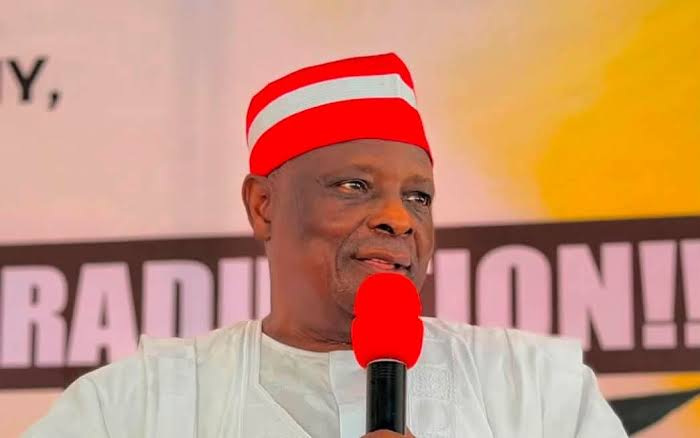
The African Democratic Congress (ADC) Presidential Campaign Council has accused Senator Rabiu Musa Kwankwaso, the vice-presidential candidate of the Nigeria Democratic Congress (NDC), of undermining opposition unity and advancing President Bola Tinubu’s political interests ahead of the 2027 general election.
The accusation followed Kwankwaso’s call for former Vice-President Atiku Abubakar, the ADC’s presidential candidate, to withdraw from the presidential race in favour of Peter Obi, who is running on the NDC platform.
Kola Ologbondiyan, Director of Media and Publicity of the ADC Presidential Campaign Council, described Kwankwaso’s intervention as self-serving, alleging that it could deepen divisions among opposition politicians seeking to challenge Tinubu and the ruling All Progressives Congress (APC).
The council questioned why Kwankwaso was urging an opposition presidential candidate to step aside rather than concentrating on challenging the incumbent administration over the country’s economic and security challenges.
Ologbondiyan further alleged that Kwankwaso’s position raised questions about his commitment to the opposition’s collective objective of defeating the APC in 2027.
The ADC campaign council also suggested that Kwankwaso could be positioning himself for future political negotiations beyond the forthcoming election, including possible ambitions relating to the 2031 presidential race. It did not, however, establish evidence of a secret arrangement between the former Kano State governor and Tinubu.
Kwankwaso’s intervention comes amid competing calculations among opposition parties over candidate selection, coalition-building and the best strategy for challenging the incumbent president.
Atiku is seeking the presidency under the ADC, while Kwankwaso is aligned with the NDC as Obi’s running mate. Their respective political camps have yet to demonstrate a common position on how opposition forces should organise themselves ahead of the election.
The disagreement also highlights the importance of Kano State in the presidential contest. Kwankwaso retains a significant political following in the state, while the ADC maintains that Atiku can build support there without relying exclusively on Kwankwaso’s endorsement.
The ADC campaign council has urged Kwankwaso and his supporters to reconsider their position and support Atiku’s candidacy, arguing that opposition leaders should focus on presenting alternatives to the current administration rather than calling on rival candidates to withdraw.
Kwankwaso’s call for Atiku to step aside, and the ADC’s response, reflect the growing contest over political alliances and opposition strategy ahead of 2027.
The allegation that Kwankwaso is secretly working for Tinubu remains the ADC campaign council’s political claim and has not been independently established. Kwankwaso and the NDC’s response would be relevant to a fuller assessment of the dispute.