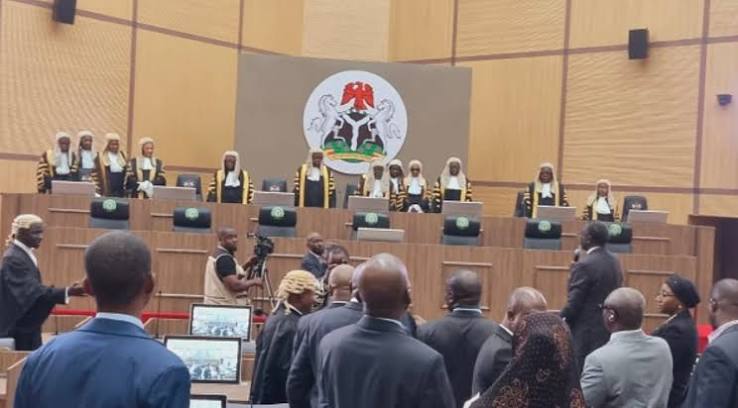
Questions are emerging over the nomination of some political candidates ahead of Nigeria’s 2027 general elections following a Supreme Court decision restoring key provisions of the Electoral Act 2026.
The development has drawn attention to the candidacies of politicians including Donald Duke, Kingsley Chinda and Ovie Omo-Agege, although the Supreme Court did not specifically disqualify any of them.
The apex court recently restored Sections 77(5), 77(6), 77(7) and 84(2) of the Electoral Act after setting aside a Court of Appeal decision that had declared the provisions unconstitutional.
The restored provisions relate, among other issues, to political-party membership registers and the procedures through which parties nominate candidates.
Under Section 77(5), only members whose names appear on a party’s membership register submitted to INEC within the prescribed period can participate in relevant primaries, congresses and conventions. Section 77(7) also provides consequences for parties that fail to submit their membership registers as required.
Section 84(2) provides for direct primaries or consensus as methods for political-party nominations.
The implications are potentially significant for candidates whose party membership or nomination circumstances changed shortly before or after party primaries.
Among those attracting attention is Rivers APC governorship candidate Kingsley Chinda, whose movement from the Peoples Democratic Party to the APC generated questions about the timing of his membership and the party register submitted to INEC.
Former Delta deputy Senate president Ovie Omo-Agege also faces questions after leaving the APC for the NDC following the APC’s nomination process and subsequently securing the NDC’s Delta Central senatorial ticket through a consensus arrangement.
Former Cross River governor Donald Duke is another candidate whose nomination has attracted legal scrutiny over the timing of his membership of the Peoples Redemption Party.
However, legal experts have cautioned against interpreting the Supreme Court ruling as an automatic disqualification of named candidates.
TheCable reported that whether an individual nomination is affected depends on specific facts, including party membership, the applicable register, the validity of the primary and compliance with the Electoral Act.
The development places renewed focus on the legal framework governing party primaries and candidate nominations as INEC continues preparations for the 2027 elections.