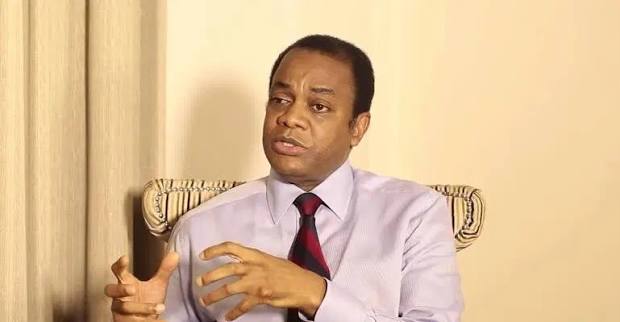
Former Cross River State governor and Peoples Redemption Party (PRP) presidential candidate Donald Duke has proposed a major change to the way crude oil is supplied to Nigeria’s domestic refineries, arguing that locally refined petroleum products could become significantly cheaper if crude is sold to domestic refiners at production cost.
Duke made the proposal against the backdrop of renewed political debate over petrol pricing and the future of fuel subsidies ahead of the 2027 presidential election.
The former governor argued that Nigeria should not necessarily price crude supplied to domestic refineries at the same level as international market prices.
Instead, he proposed that crude intended for domestic refining should be made available at its production cost.
The argument is similar to the broader debate around domestic crude pricing that has emerged following the development of Nigeria’s refining capacity.
How Duke says the model could work
According to Duke, reducing the cost of crude supplied to domestic refineries would lower the cost base for refiners.
He argued that the revenue generated from other refined products — including diesel, aviation fuel and kerosene — could help offset the economics of petrol production.
In his view, such a model could reduce the amount ultimately paid by consumers for petrol.
The proposal comes as Nigerian politicians continue to debate whether the country should return to some form of petrol subsidy.
Former Vice-President Atiku Abubakar, who is seeking the presidency in 2027, has said he would restore petrol subsidy if elected.
That position has triggered counterarguments from economists, politicians and other stakeholders who remain divided over whether subsidy is sustainable.
The subsidy debate returns
Nigeria formally removed its long-standing petrol subsidy after President Bola Tinubu took office in May 2023.
The decision immediately altered the economics of the downstream petroleum sector and triggered a sharp increase in petrol prices.
The government has repeatedly defended the policy, arguing that subsidy payments placed a significant burden on public finances and diverted resources that could have been used for development.
Critics, however, have maintained that removing the subsidy without sufficient social protection has increased the cost of living.
The debate has become increasingly political ahead of 2027.
Atiku’s pledge to restore subsidy has become a central part of the argument over how a future government should manage petrol prices.
Domestic crude pricing at the centre of the debate
The emergence of large-scale domestic refining capacity has also changed the conversation.
Nigeria now has greater potential to refine crude domestically rather than exporting crude and importing refined petroleum products.
The key question, however, is the price at which domestic refineries should obtain crude.
A separate proposal advocating a petrol price of around N605 per litre has also been based on a domestic crude pricing model. Recent reporting on the debate has highlighted arguments over whether crude supplied to local refiners should reflect production cost rather than international benchmark prices.
Duke’s position adds another political voice to that discussion.
What the proposal means for consumers
If domestic refiners could obtain crude at substantially lower prices and pass those savings through the value chain, petrol prices could theoretically fall.
However, the final pump price would still depend on several other factors, including refining costs, transportation, storage, distribution, taxes, margins and exchange-rate movements.
The proposal therefore does not automatically translate into a particular petrol price.
It also raises a broader fiscal question: if crude is sold below an internationally determined opportunity cost, the government or national oil company could effectively be foregoing potential revenue.
That means any domestic crude pricing policy would need to balance consumer affordability with the financial sustainability of Nigeria’s oil sector.
2027 politics and fuel prices
The petrol subsidy debate is likely to remain a major issue in the 2027 election.
For millions of Nigerians, fuel prices have direct consequences for transportation, food prices, electricity generation and household expenses.
Duke’s argument is therefore part of a much wider political contest over how Nigeria should manage its oil resources and whether the benefits of domestic crude production can be transferred more directly to consumers.
The central question is no longer simply whether Nigeria can refine its own crude.
It is increasingly about whether the country’s crude resources can be priced and managed in a way that makes domestic energy more affordable while preserving the long-term viability of the petroleum industry.