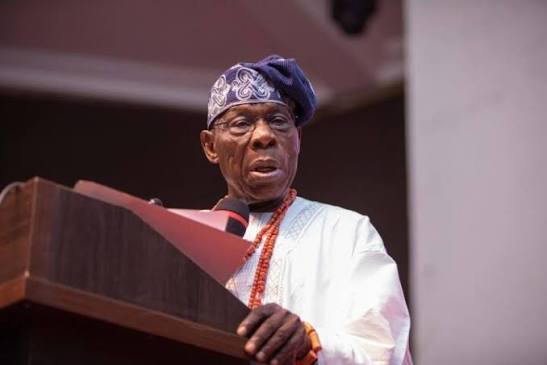
Former Nigerian President Olusegun Obasanjo has emphasised Nigeria’s historical contribution to the struggle against apartheid in South Africa, arguing that the system would not have ended when it did without Nigeria’s support.
Obasanjo’s remarks reflect Nigeria’s longstanding role in supporting liberation movements across southern Africa during the decades-long struggle against white-minority rule.
Nigeria was a major political and financial supporter of anti-apartheid efforts and provided assistance to liberation movements and frontline states during the apartheid era. Historical accounts have documented Nigeria’s significant support for the broader liberation struggle in Africa.
Nigeria’s diplomatic role
During the apartheid era, Nigeria used its diplomatic influence to oppose South Africa’s racial policies and supported international pressure on the apartheid government.
Successive Nigerian governments contributed financially and politically to liberation efforts, while Nigerian civil society and ordinary citizens also participated in campaigns against apartheid.
Nigeria’s involvement extended beyond diplomatic statements. The country provided support to liberation movements and frontline states facing pressure from the apartheid regime and its allies.
A legacy that shaped regional politics
South Africa’s apartheid system formally ended in the early 1990s, culminating in the country’s first democratic elections in 1994 and Nelson Mandela’s inauguration as president.
Nigeria’s contribution is therefore an important part of the wider history of African liberation and regional diplomacy.
Obasanjo’s latest comments revive discussion about the role Nigeria played during a period when African states were still battling colonial rule and institutionalised racial discrimination.
They also come against the backdrop of contemporary strains in Nigeria-South Africa relations, including concerns over attacks against Nigerians living in South Africa.
Nigeria’s Parliament recently suspended official parliamentary visits and legislative participation in South Africa over ongoing anti-migrant violence, highlighting how dramatically relations between the two countries have evolved since the apartheid era.