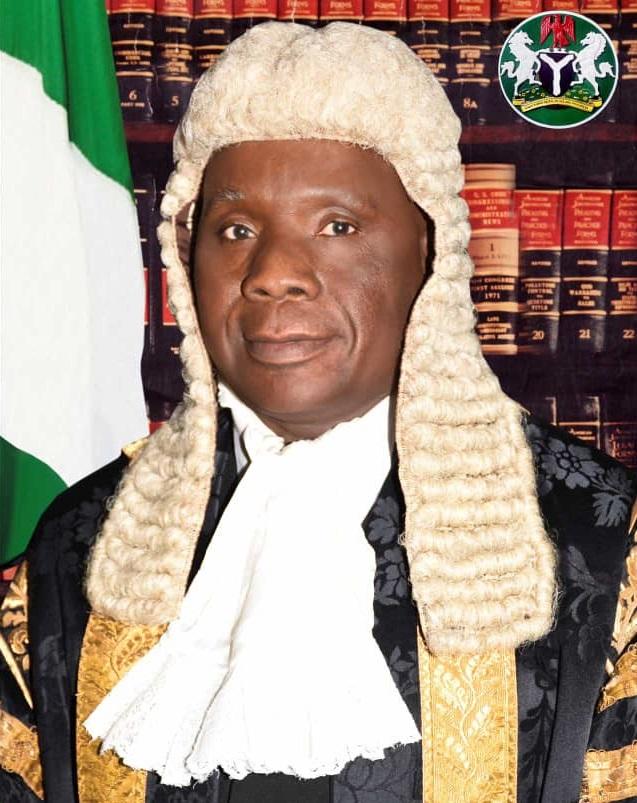
Retiring Supreme Court Justice Ibrahim Saulawa has called for action against the practice of politicians giving gifts to judicial officers, warning that such gestures could undermine the dignity and independence of the judiciary.
Saulawa made the remarks on Tuesday during a valedictory court session held in his honour as he retired from the Supreme Court after attaining the mandatory retirement age of 70.
The jurist, who spent 44 years in the legal profession, criticised the practice of politicians sending livestock and other items to judges, describing such gifts as inappropriate.
“Why should a politician send a ram, cow or other items to a Supreme Court Justice? It is unheard of in other countries,” he said.
Calls for Action by Chief Justice
Saulawa urged the Chief Justice of Nigeria (CJN) to address the practice, saying he had previously raised the issue with the head of the judiciary.
“I am calling on the CJN to do something about this. I once raised the issue. It is demeaning and equally frustrating,” he said.
His comments focused on the need to preserve the independence, integrity and public standing of the courts, particularly where gifts from politically influential individuals could raise questions about impartiality.
Judicial Independence and Public Confidence
Judicial independence requires judges to decide cases on the evidence, applicable law and legal principles rather than external pressure or personal considerations.
Even where a gift is not expressly linked to a particular case, its circumstances and timing can raise questions about propriety and the appearance of impartiality.
Saulawa’s intervention highlights the importance of clear ethical standards governing relations between judicial officers, politicians and other influential individuals.
His retirement marks the end of a lengthy legal career, during which he served in the judiciary and ultimately at Nigeria’s apex court.
The concerns he raised leave a broader institutional question about how judicial ethics rules are communicated, monitored and enforced to sustain public confidence in the justice system.